Where to begin?
The moment every mother-to-be wants, a positive pregnancy test. For many, they only had to try for a short period of time. Well for us, this has been a few years in the making. Doug and I tried for a couple of years in Colorado, but no luck. After so many negative pregnancy tests, you feel like a failure. You watch others in joy as they celebrate the news they are going to have a baby. You feel resentment towards yourself. You start to doubt, will I ever be a mom? Will I ever have a family? What is Doug going to think if it’s me that’s the problem? Am I infertile? As each month goes on, more doubt creeps in.
I had started to give up on the idea of having a family on our own. I started to think we should just adopt. There are so many children who need a home.
The Beginning
We moved to Japan at the end of June 2020. By the end of August 2020, I was staring at a positive pregnancy test. After so many negative tests, I was finally holding onto a positive one! I told Doug right away. The next day, I took another test just to make sure. It was positive too. The next step was to call the base health clinic to set up an appointment.
Sasebo Base Health Clinic
Doug is stationed at CFA Sasebo. It’s a small U.S Navy Installation in Sasebo, Japan. They don’t have a large hospital on base. They just have a small health clinic. They can do blood work, some other lab work, and some general appointments.
I went to the base health clinic for a urine analysis to confirm I was pregnant. Then I had to wait a week to get blood drawn. Yes, a week. The health clinic only does blood work on Mondays and Tuesdays before 10:30 a.m. Then they send it to the states. After the blood work came back, I was then scheduled an appointment.
Appointments
My first appointment was going to be at a local hospital out in town. There are several hospitals but they send you based on a certain criteria. I was sent to Sasebo Kyosai Hospital due to my Spina Befida Occulta. Yes, I have back issues that interfere with receiving any injection into my lower back. Where my Spina Befida is located, the chances of an epidural working is 25%. I have known this for a long time, if/when I gave birth, I wouldn’t be able to get an epidural.
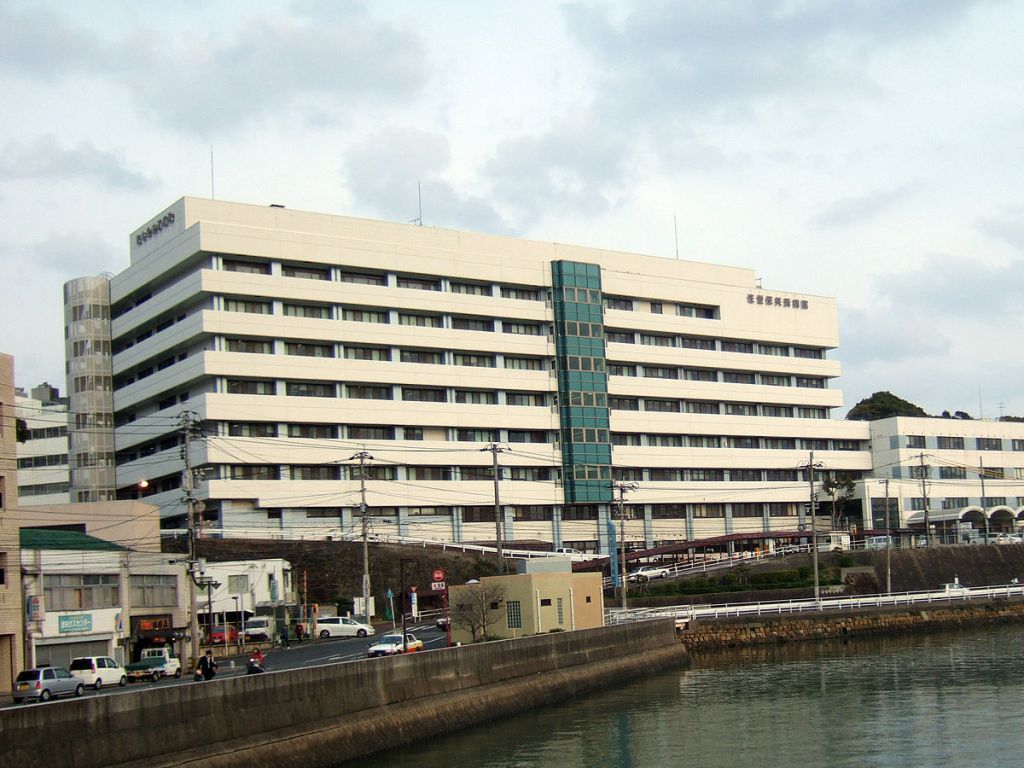
Anyways, onto my first appointment and the many to follow. My first appointment was on September 17th, 2020. The way it works is you may get a ride from base or meet up at the hospital. The parking is limited at the hospitals and if you don’t get your ticket validated, you must pay. You are assigned a translator to go with you to all your appointments. I would just meet my translator on base and ride over. It was the best option with what time my appointments were at. My appointments were usually at 8:30 a.m. which was a popular time at the hospital.
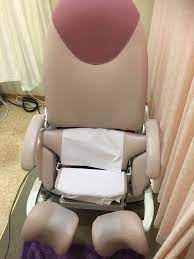
My first appointment, they did a urine analysis, weight measurements, checked my blood pressure, and ultrasound. Since it was too early for a regular ultrasound, they did a trans vaginal ultrasound. I wasn’t looking forward to this part. In the US we have the table with stirrups and you are never close enough, so you scoot yourself forward. It’s awkward. Japan isn’t having any of that. They have an automatic chair you sit in. The chair does all the work!
I am not going to bore you with all of my appointments. That’s just way too many. I had monthly appointments up until about 30 weeks. At 30 weeks, they became biweekly (twice a month). At 36 weeks, they became once a week. I would always have a urine test, measurements taken, and an ultrasound done at every appointment. There were a few appointments I had to get blood drawn. Then of course, there is the glucose test. I know many friends complain about how nasty the glucose drink is. In Japan, I figured it would be something gross. The glucose drink tasted like a Mitsuya Cider which is a crisp soda here.
My favorite moments from my appointments have been my doctor for sure telling me it was a girl at 27 weeks. Before that he would just say it might be a girl. This was of course said in Japanese and my translator telling me in English. Around 34 weeks, the doctor was checking on her and she was refusing to show her face. There was a lot of laughter that day. My doctor did know some English, which was lovely.
I only ever had one appointment on base with an OBGYN. They did an ultrasound to make sure there was a baby. We talked about how I should take extra Folic Acid to offset my baby being born with a neural tube defect (Spina Befida Occulta). We discussed whether I wanted to give birth in Yokosuka or out in town. I chose out in town.
Why did I decide to give birth in a Japanese Hospital?
I had the option to go to the U.S.Navy Base in Yokosuka to give birth. I decided not to. Many women give birth in Yokosuka because for an epidural. Well I cannot really get an epidural. So why go? Plus, you must take the train up there and back. Yokosuka is close to Tokyo which is about a 14 hour car ride or a 7 hour train ride. You are also required to ship some things between bases to help with birthing. I almost forgot, you must go around 37 weeks. With Doug’s deployment schedule, he might make it back, he might not. We just decided to stay here in Sasebo.
Sasebo Kyosai Hospital is a six minute drive from our apartment. It’s close.
Epidurals in Japan
Epidurals aren’t very common in Japan in general. Pain management is a totally different concept here. In the U.S. they give out pain medication like candy. In Japan, they don’t. In Sasebo, they have three hospitals and one birthing center. Only one hospital does epidurals. That one hospital only does three epidurals a day and it’s only during a weekday. I know, odd.
This is a video about some interesting facts about giving birth in Japan. This couple lives in Tokyo.
Go with the flow
Now onto the end of pregnancy. As our due date approached, many people kept asking: where is she? My feelings was she will come when she wants to come. My doctor didn’t seem alarmed and neither did I.
I downloaded a pregnancy app to keep up with appointments and to track baby’s weekly growth. On the app, there is a community section. I noticed in the community posts, women would talk about getting a membrane sweep or being induced around 37 or 38 weeks. The community is mostly women in the U.S. There are a few women from Europe and Australia. How did I know? They would put where they were in the post. Anyways, I started to realize how in the U.S. we rush to have babies around 37, 38, 39 weeks. Women give birth then can go home a day or two later, longer if you had a c-section, totally understandable. In Japan, you are in the hospital for a week after birth. Yes, a week.
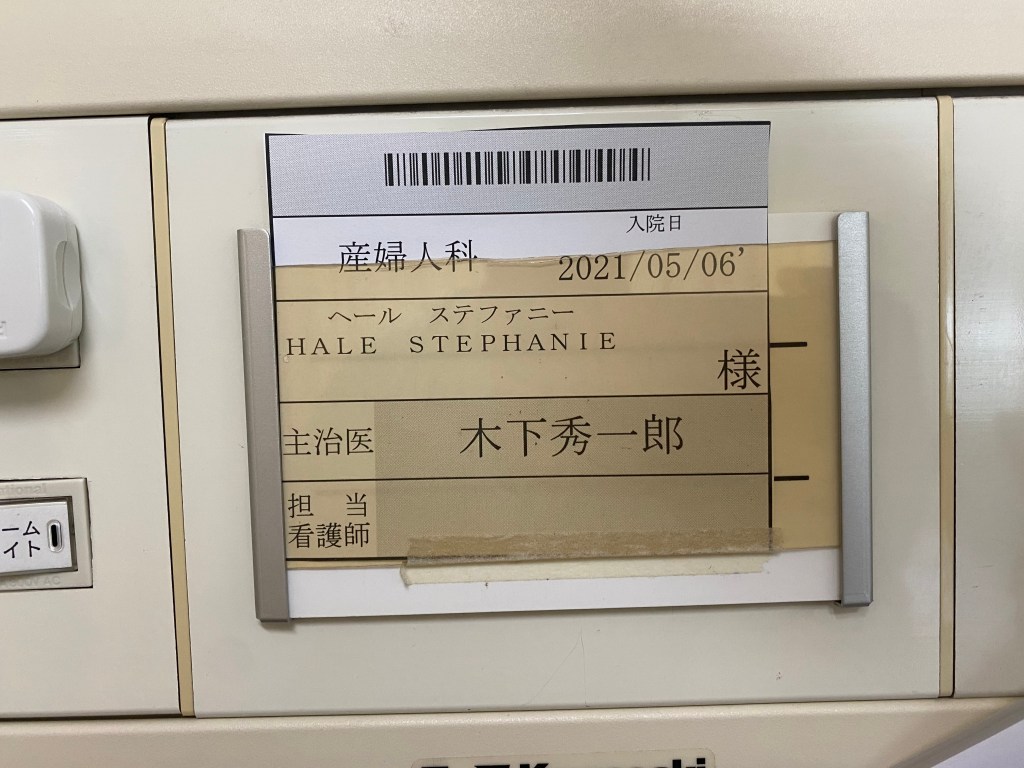
Our due date came and went. My doctor then decided to schedule a date to induce me. He went with May 6th, because it was the end of Golden Week. Golden Week consists of four holidays at the end of April to beginning of May. Many Japanese take days off around the four holidays to make it a week.
May 6th Inducement Day
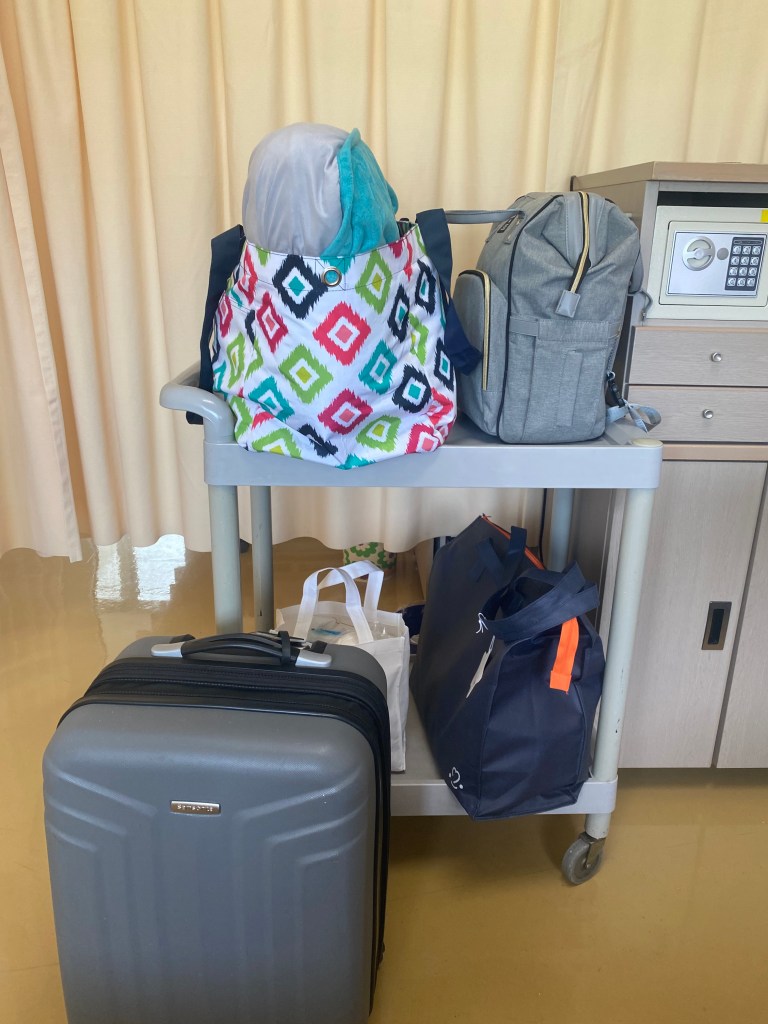
Doug took me to the hospital with all my bags. Yes, I had several bags. I had to a checklist of items to bring. Plus, I needed to have a weeks worth of pajamas and some clothes. The best item I packed was my pillow! Yes, I brought my own pillow.
I meet my translator at the hospital. I know, I usually wouldn’t do this, but I had a lot of stuff. She checked me in on the first floor, then we went up to the OB ward on the fourth floor. A nurse took my items to my room. I went with my translator and another nurse for a tour of the ward. My translator and I had already filled out my hospitalization paperwork a while back. We had to fill out my induction paperwork. Then that was it. My translator then left. I was on my own.
I went back to my room to unpack. I was then taken to the sixth floor for a Covid-19 test (this hospital has eight floors). This was my fourth Covid-19 test. I had to have one entering Japan and two before my appointments. This was the worst one. They left the swab in my nose for ten seconds then swirled it in my nose for ten seconds. I teared up.
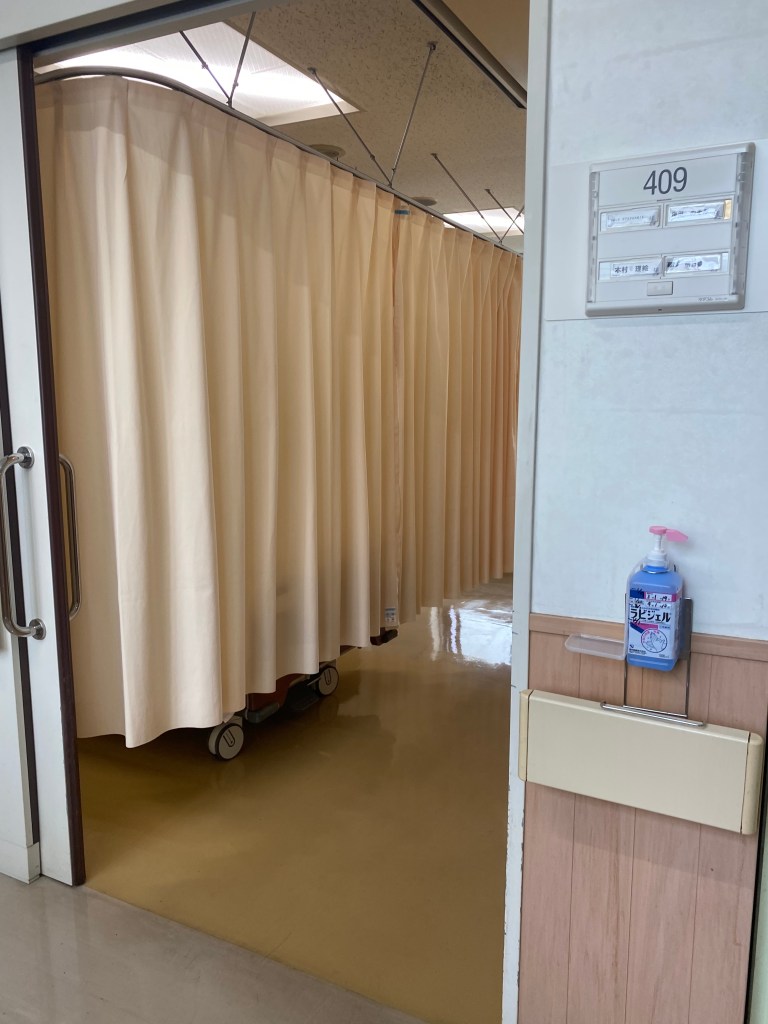
My Room 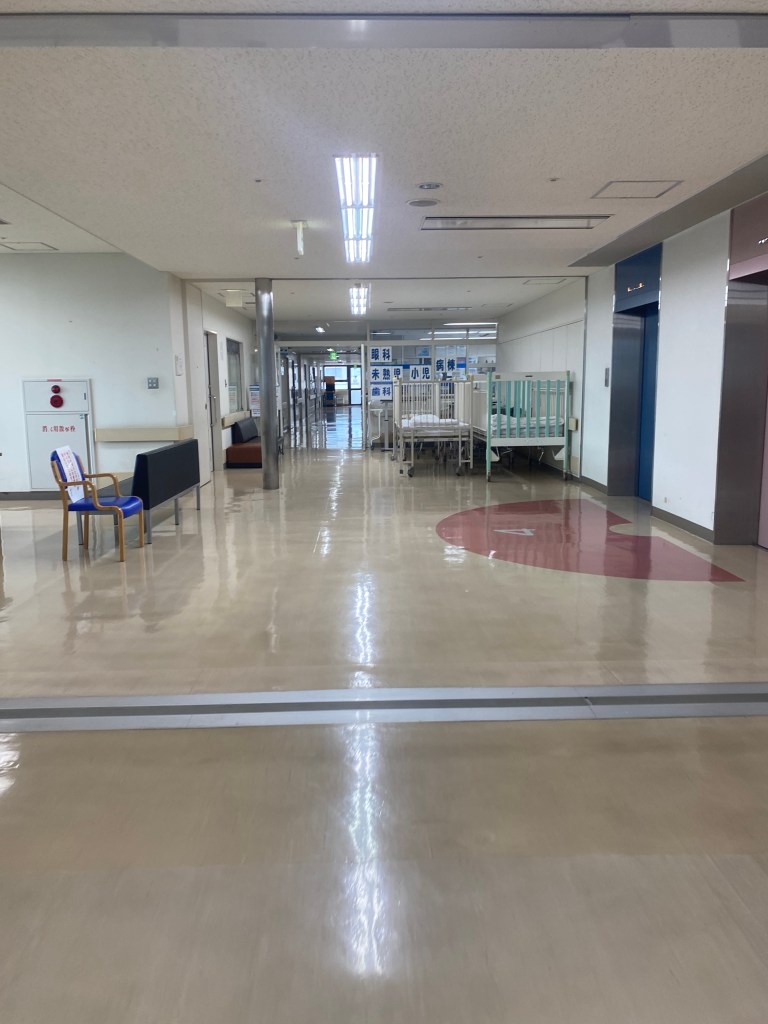
Fourth Floor 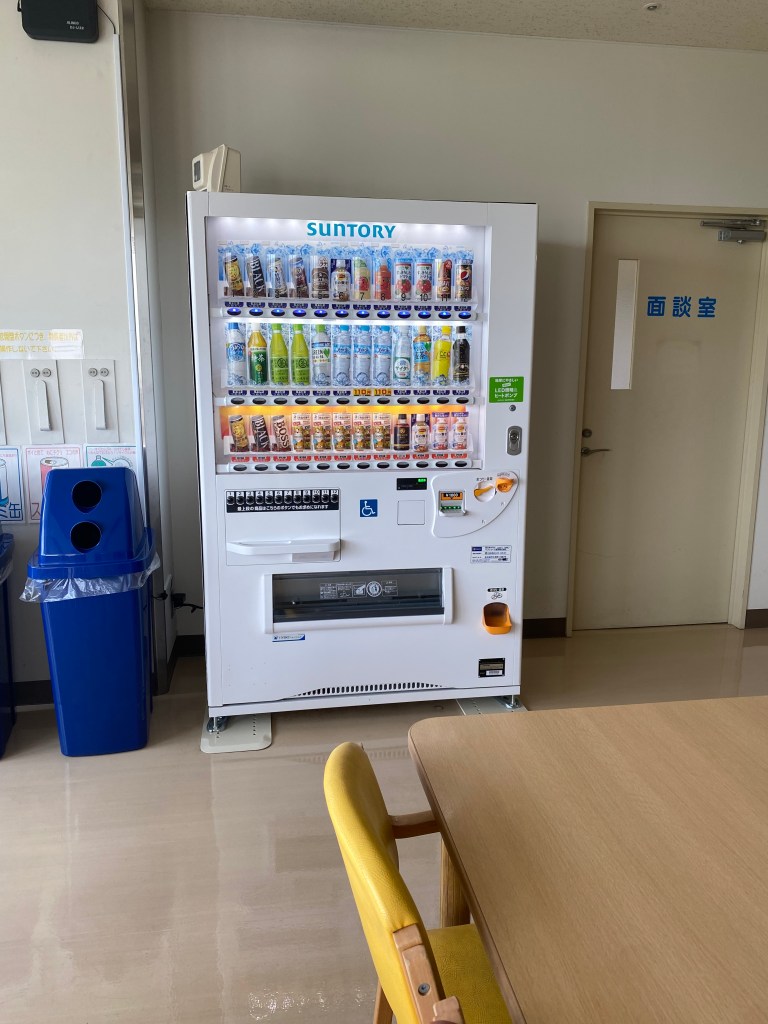
Waiting Area 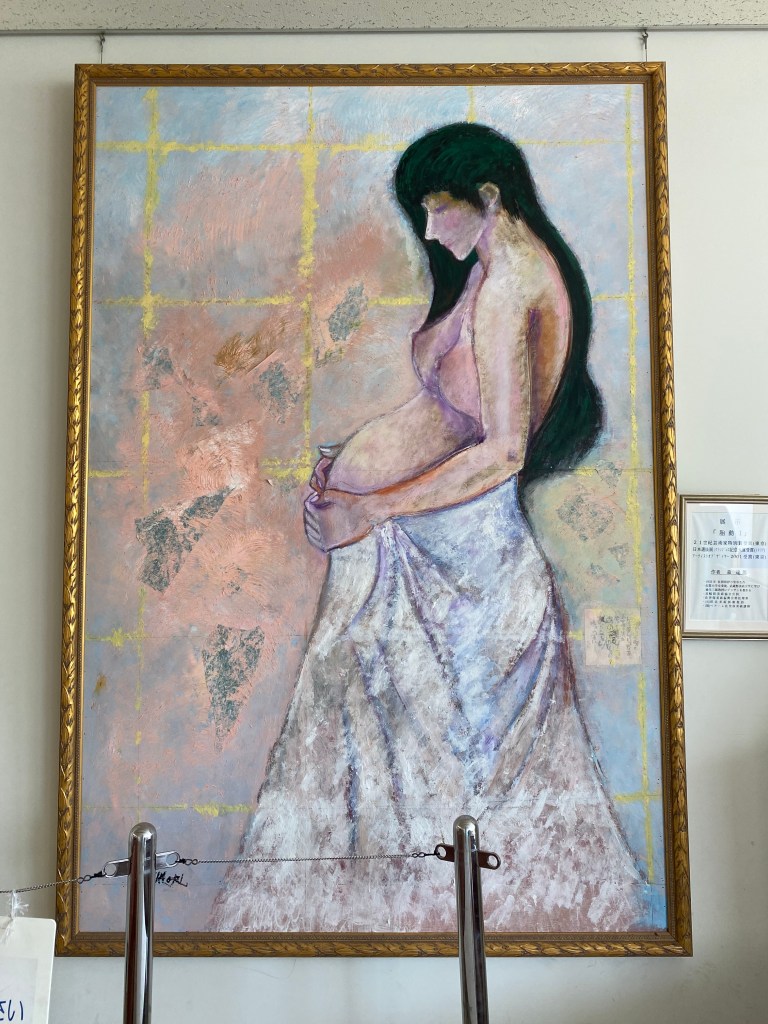
Painting in the Waiting Area
The inducement
The plan was to first insert a Foley Bulb into my cervix first. My cervix wasn’t open yet, it was soft though. Then to be given inducement pills. Most of the time the pills don’t work, so I will be given an IV.
My doctor inserted the Foley Bulb later in the day on May 6th. It was taken out early the next day, May 7th. He then checked my cervix. I was about 2 cm dilated. The Bulb was a success! I was immediately placed in a different room and was started on induction pills.
I received 6 induction pills altogether. They were given at one hour increments. The whole time while I was taking the pills I was hooked up to a CTG (cardiotocography). CTG monitors baby’s heartbeat and my contractions. The pills were doing something, because I was starting to have small regular contractions. I was allowed to eat during my 6 hours of pills and monitoring. I was given breakfast and lunch. I threw up my breakfast. That was lovely, not. I was able to keep lunch and dinner down. Yay!
After the monitoring, I was sent back to my room. The nurses would come to check on me occasionally. Around 2 a.m. on May 8th, I woke up to stronger contractions in 5 minute increments. This was hopeful!
On May 8th, I was tired the whole day. I would sleep between the stronger contractions all throughout the day. The nursing staff would come in regularly to check vitals. I would be hook up to the CTG three times. One was early in the day, in my room. I was told once contractions got to two to three minutes to call. I tracked my contractions for one hour and they were between two to three minutes. They were getting intense. I decided to call the nurses. They took me to the room I was in yesterday to hook me up to the CTG machine. The CTG showed my contractions were there time wise, but not strong enough. After being monitored I went to the bathroom. I hadn’t really ate much all day. I just wasn’t feeling good. I threw up what little I did eat. I called the nurse, because I threw up in the trash can and didn’t want to leave it in the bathroom. They decided it was time to check how far I was dilated. At this point I was 6 cm.
Active Labor
I was then sent to the birthing room, which was next door to the room I was just in. They called my doctor in to make sure I was at 6 cm. My water broke while he was checking me. I was hooked up again to CTG. My contractions were definitely closer and stronger. About an hour after being in the room, I could no longer keep my body from pushing. The nurse had the doctor check and I was at 10 cm. The magic number, 10 cm.
Then all of a sudden there were three nurses, my doctor, and I assume another doctor (he was in scrubs). I assume about the other doctor, because he was just standing there the majority of the time. He was out of place. Anyways, they then started prepping me and getting everything ready. It was chaotic for a moment while they were prepping me and the room. My doctor was hilarious the whole time. He was so excited and happy. I laughed. My favorite part was when he told me he loves America in a mix of English and Japanese.
When it came to the moments to push, my body knew when to do it. I don’t know how many pushes it took, but it wasn’t long. I did make one of the nurses laugh. I kept closing my eyes and she told me to open them. I opened them real big. I even made myself laugh.
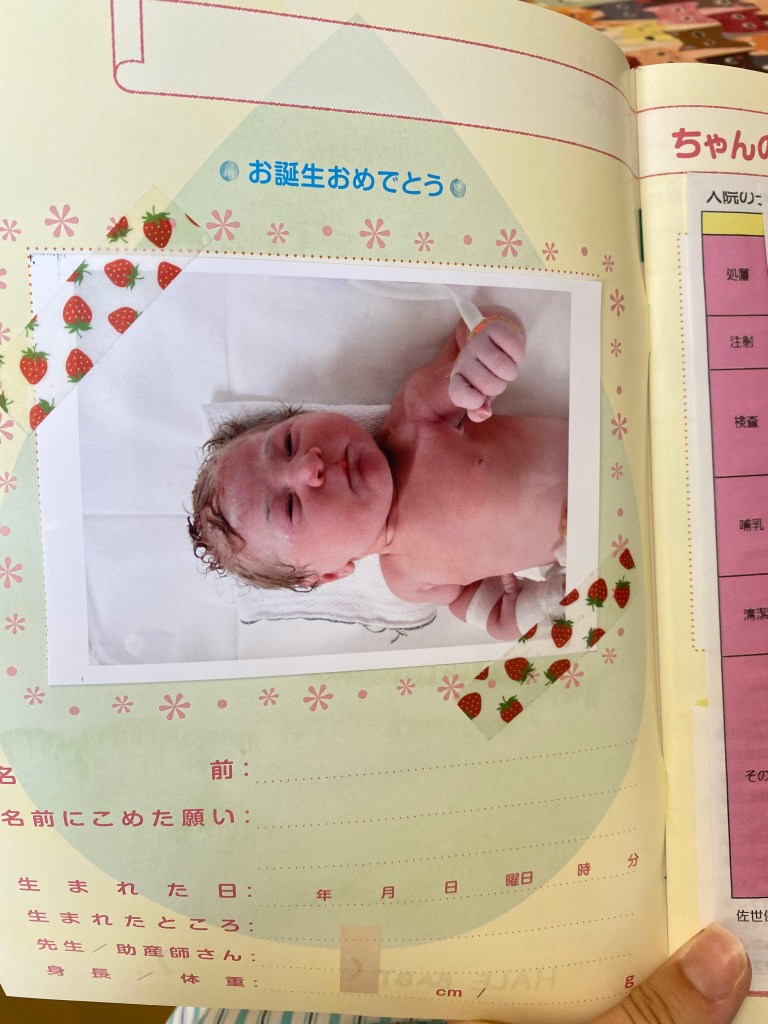
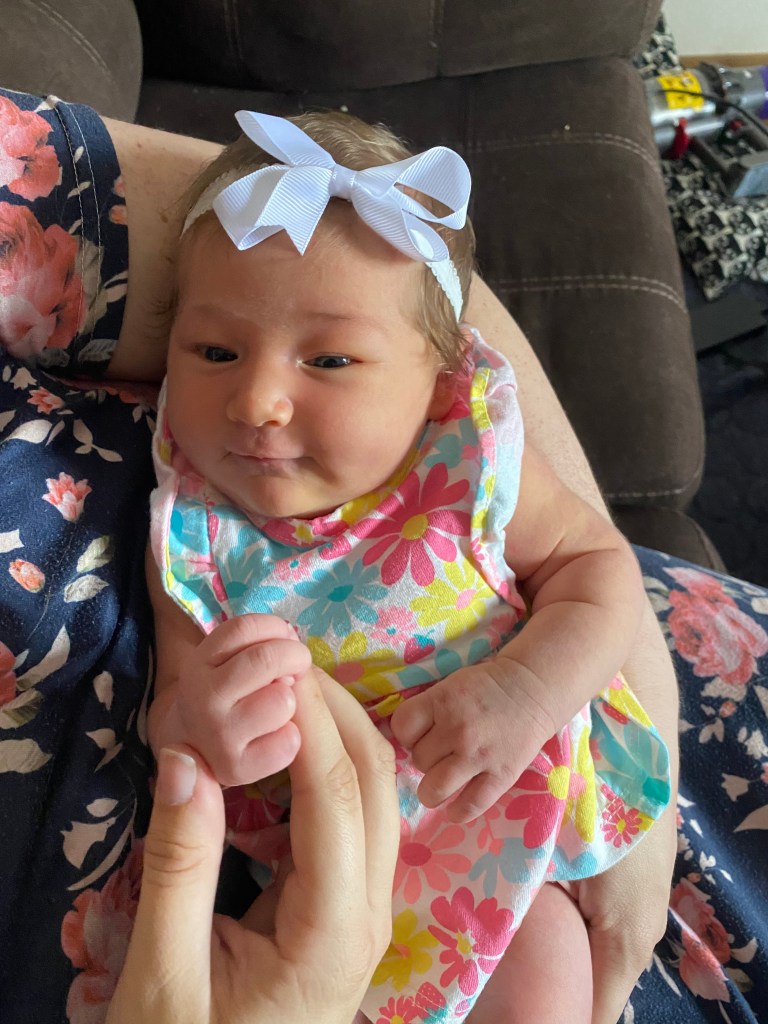
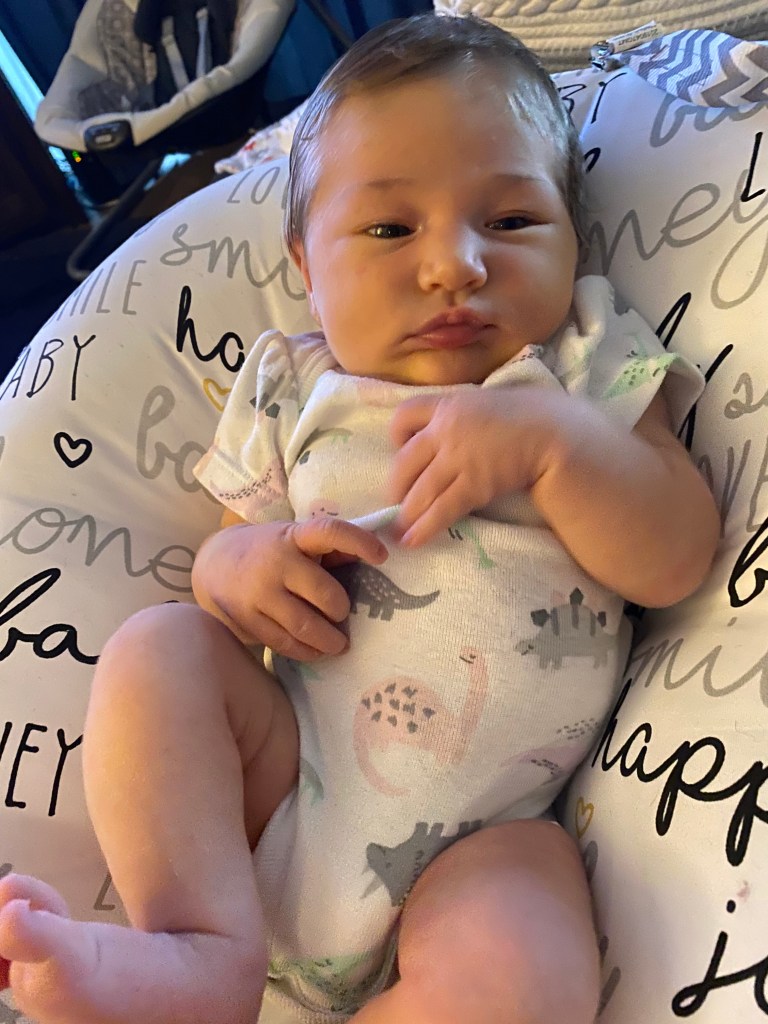
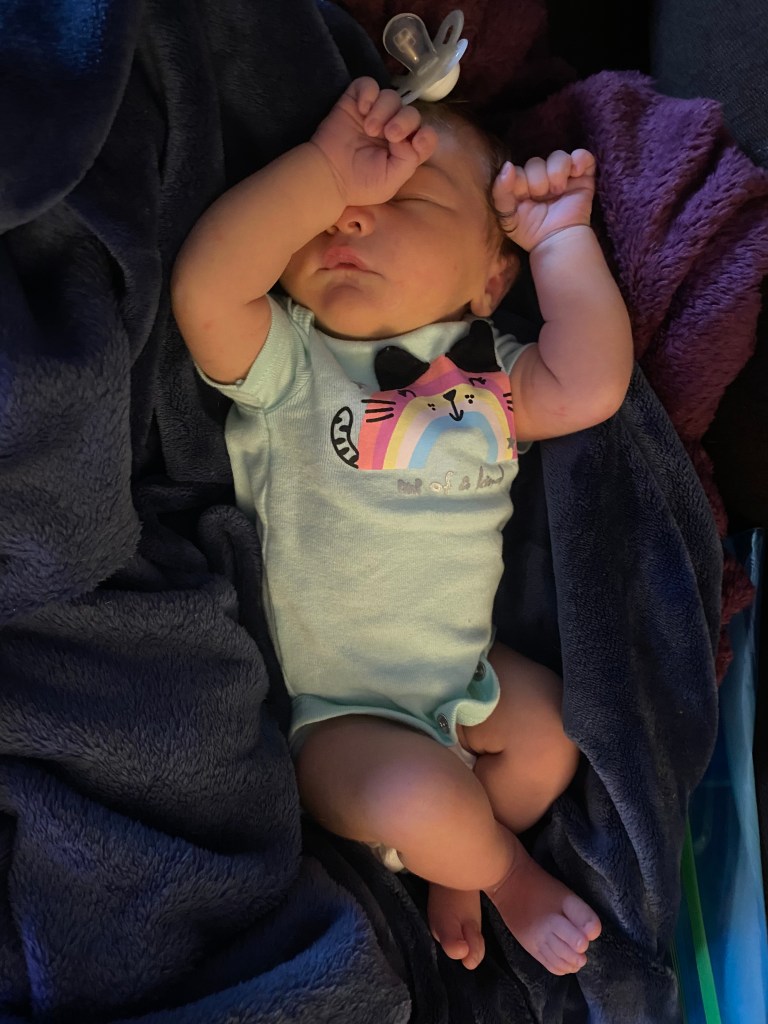
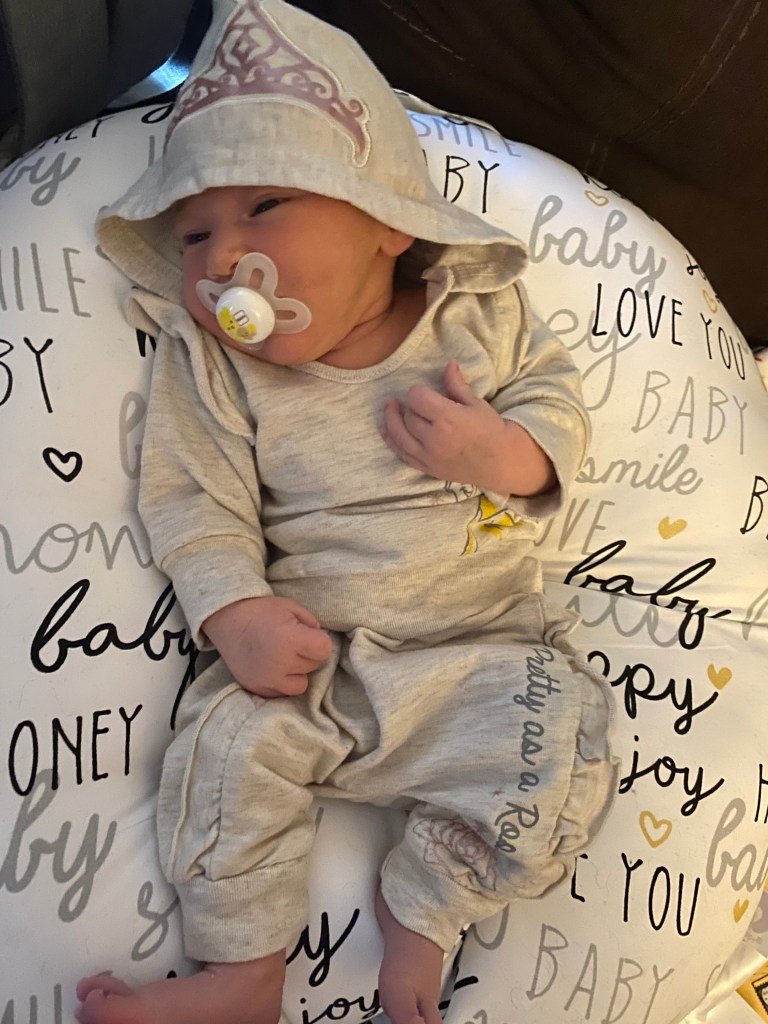
Kiki arrived sometime after 10:30 pm on May 8th. I couldn’t really see the clock. I was so happy she made it. I was staring in awe of her as they were cleaning her and checking her. A pediatrician came in to check her. The last part of labor is delivering the placenta. My doctor massaged my stomach while the midwife retrieved the placenta. I was focusing on Kiki and watching her the whole time. They cleaned off Kiki and I was able to hold her. The nursing staff took pictures for me.
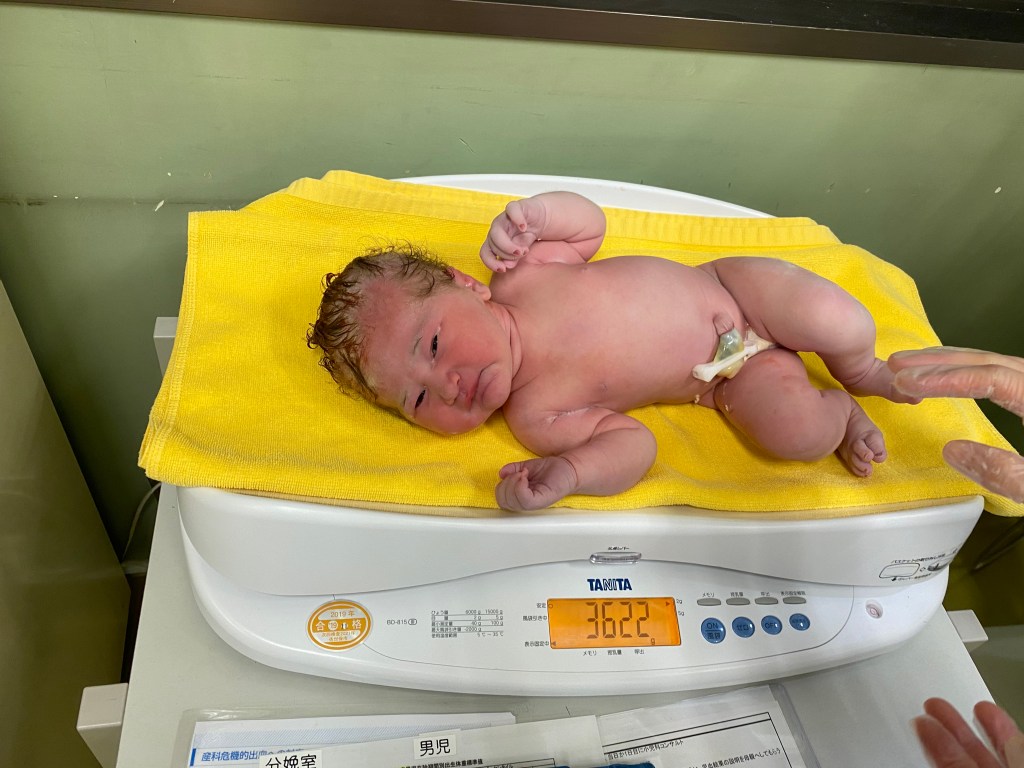
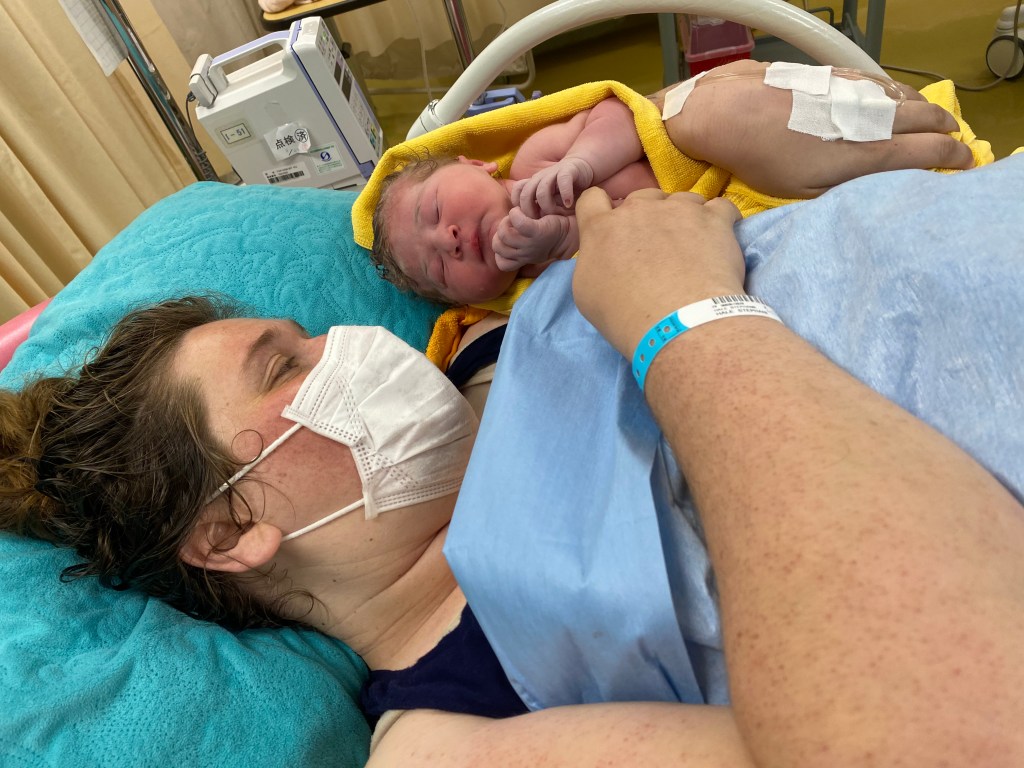
I was monitored for two hours after giving birth. My doctor had to stitch me up, because he had to cut me. I am going to spare you on those details. Kiki was taken to the NICU, because they noticed she was having trouble breathing. The pediatrician did come to tell me she had an infection in her right lung and they started antibiotics right away.
My Hospital Stay
I was given my schedule for the next seven days on May 9th. It said I was going home on Saturday, May 16th. That made me happy I had a day we would be going home.
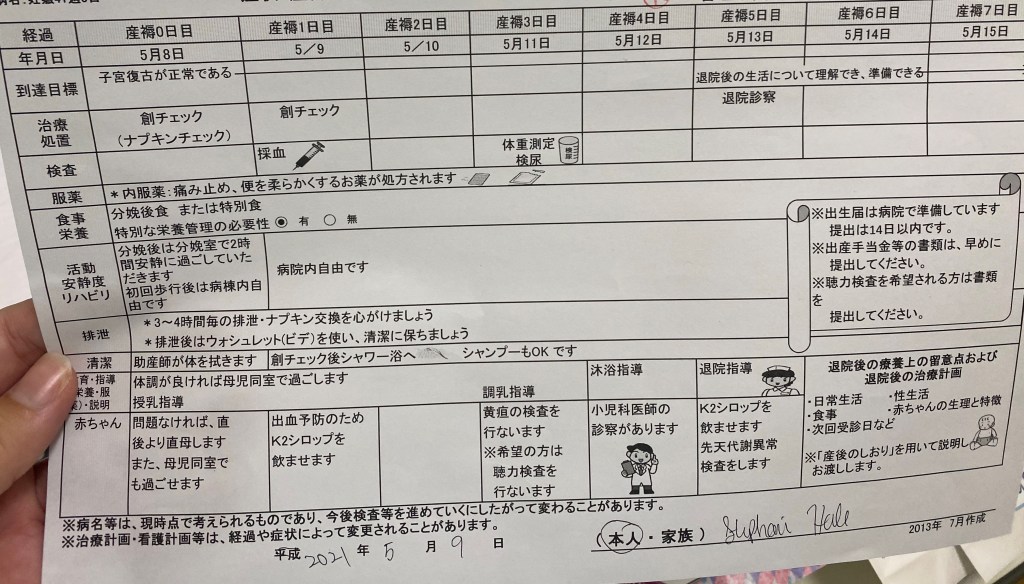
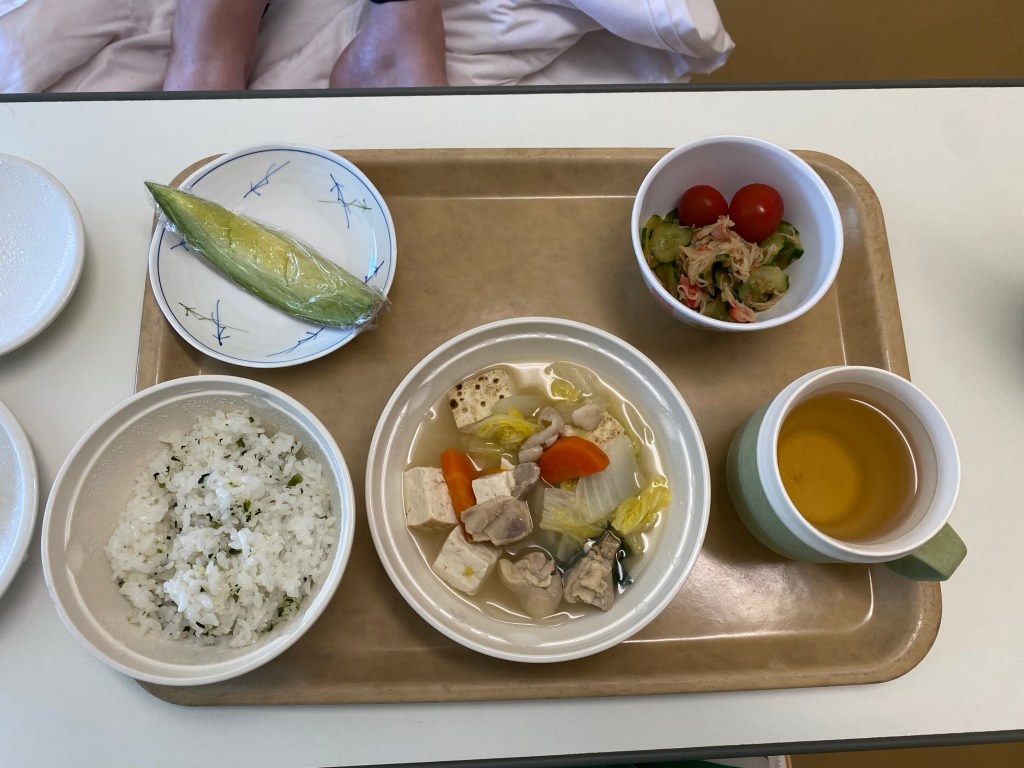
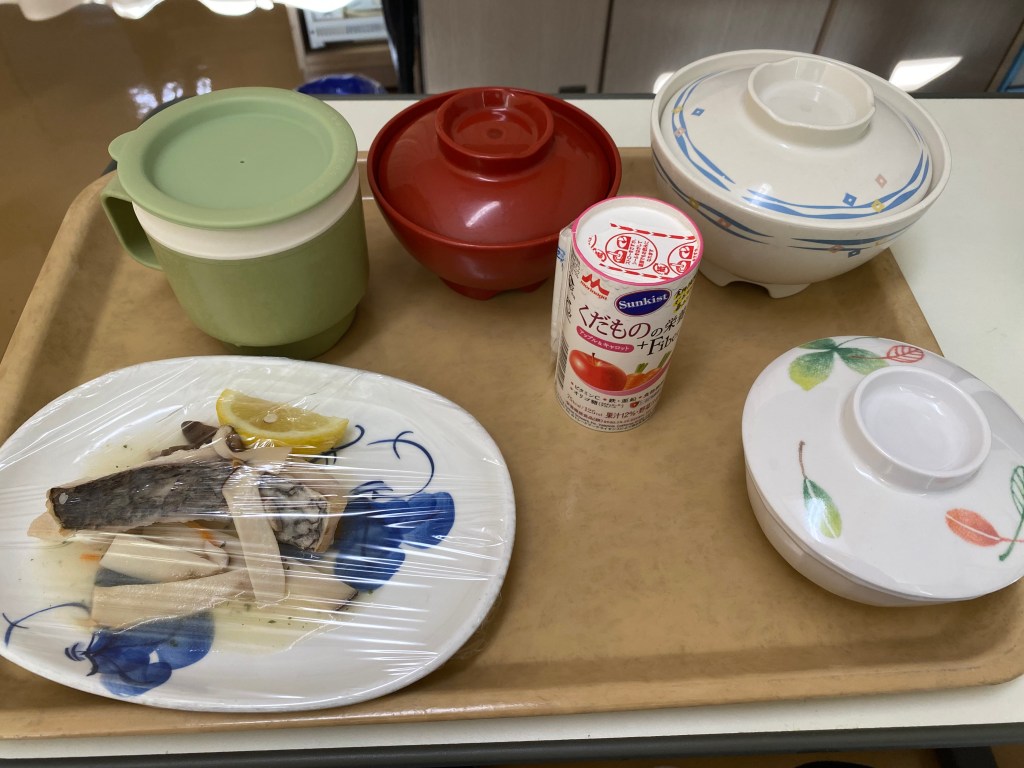
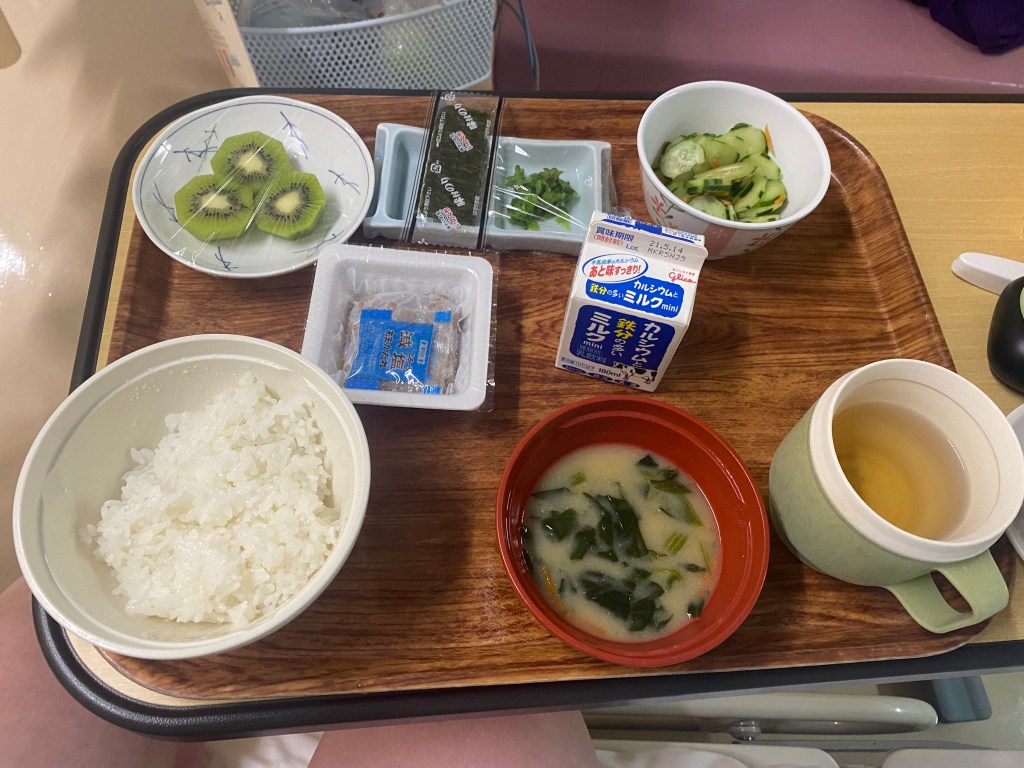
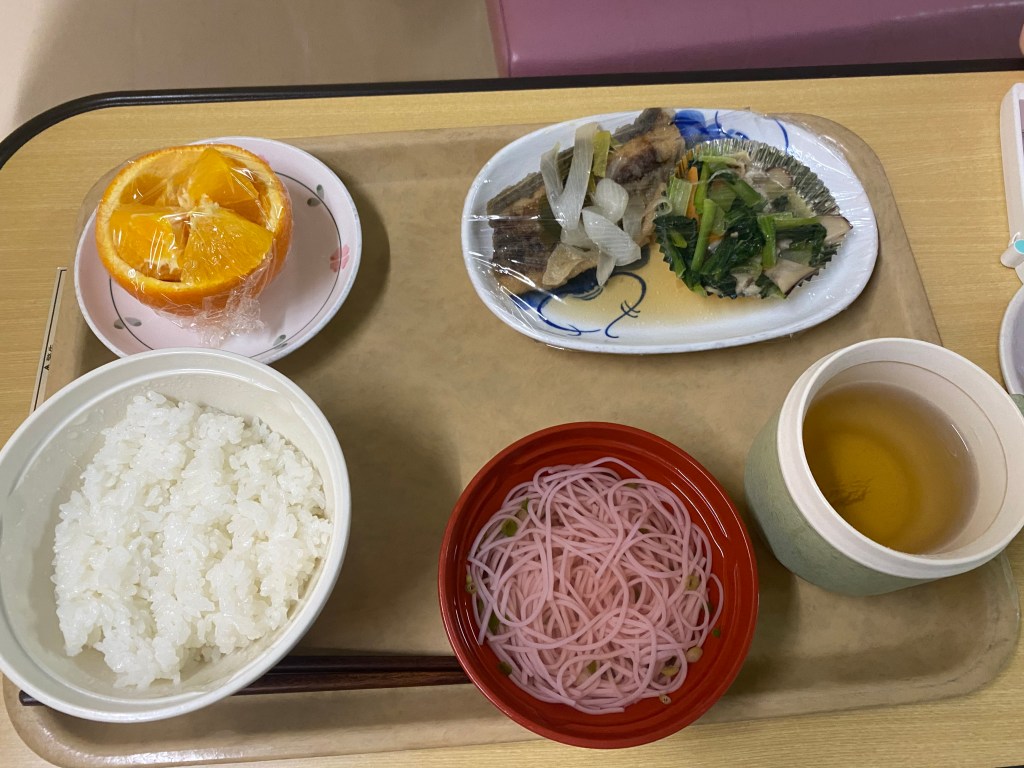
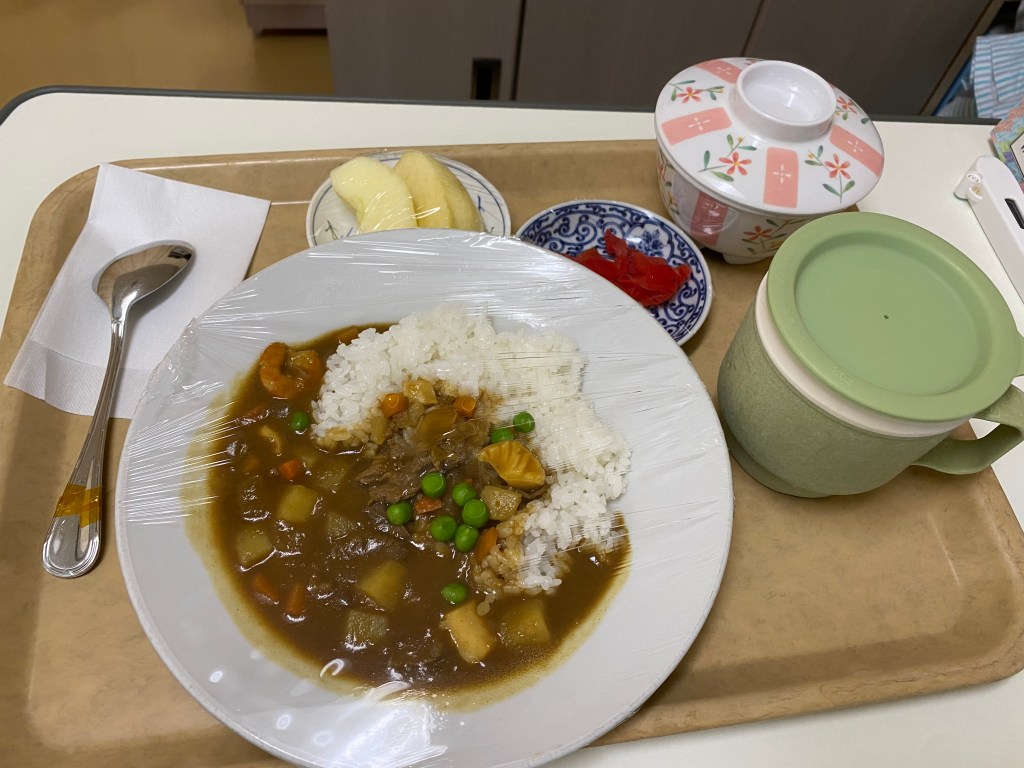
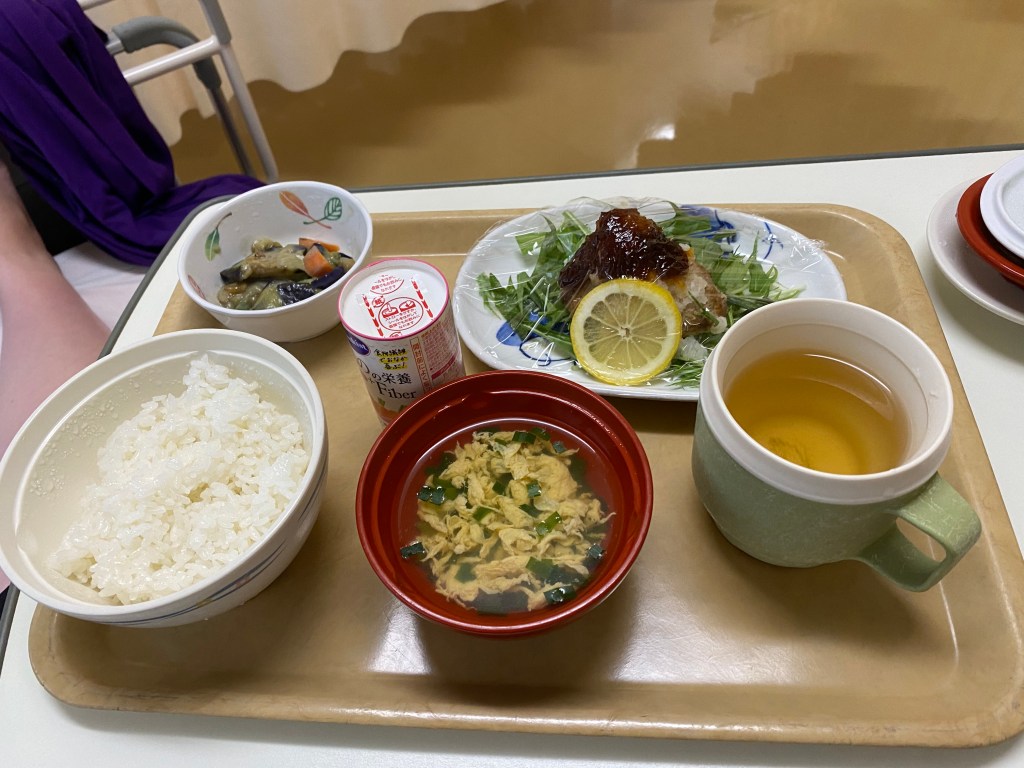
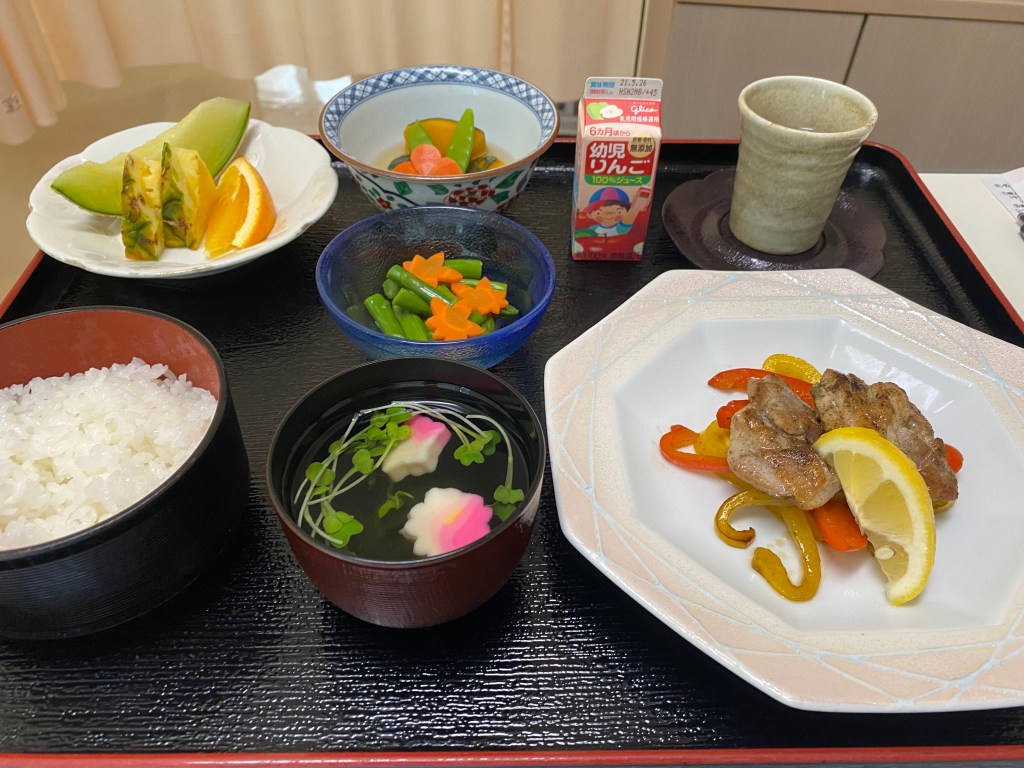
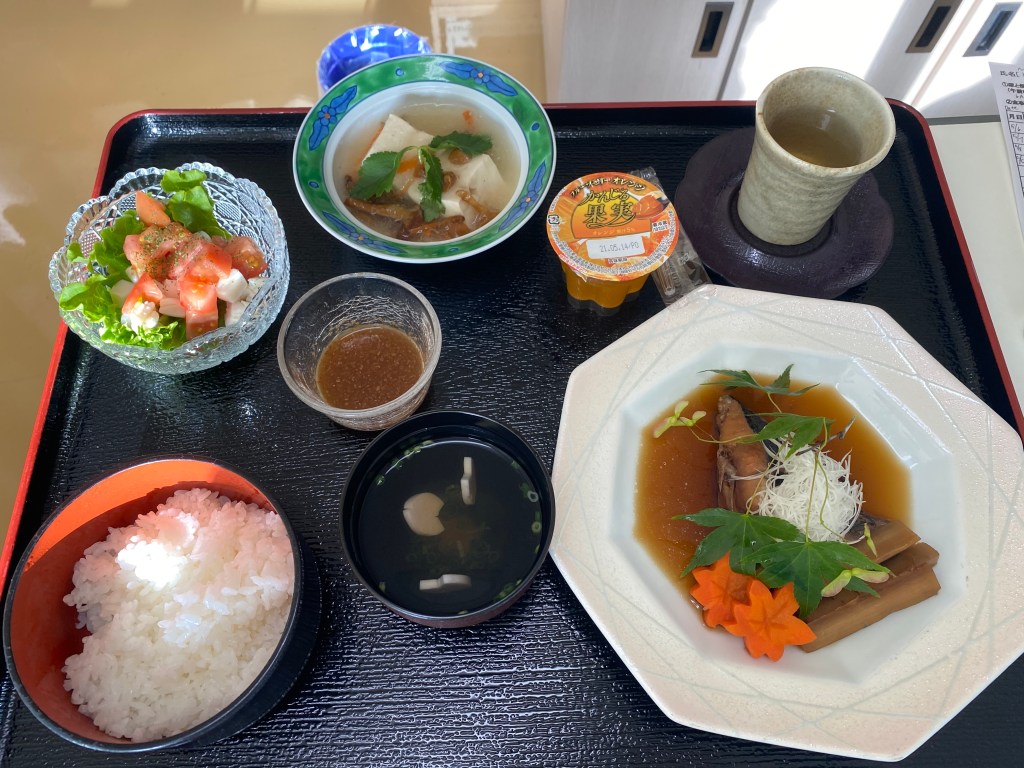
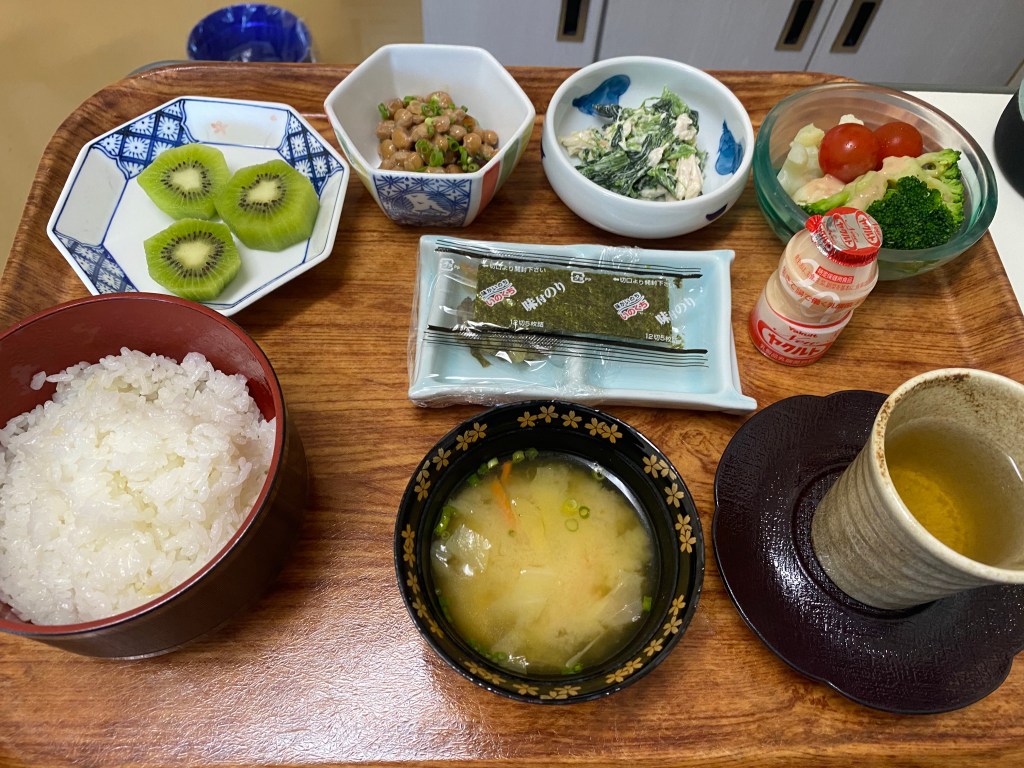
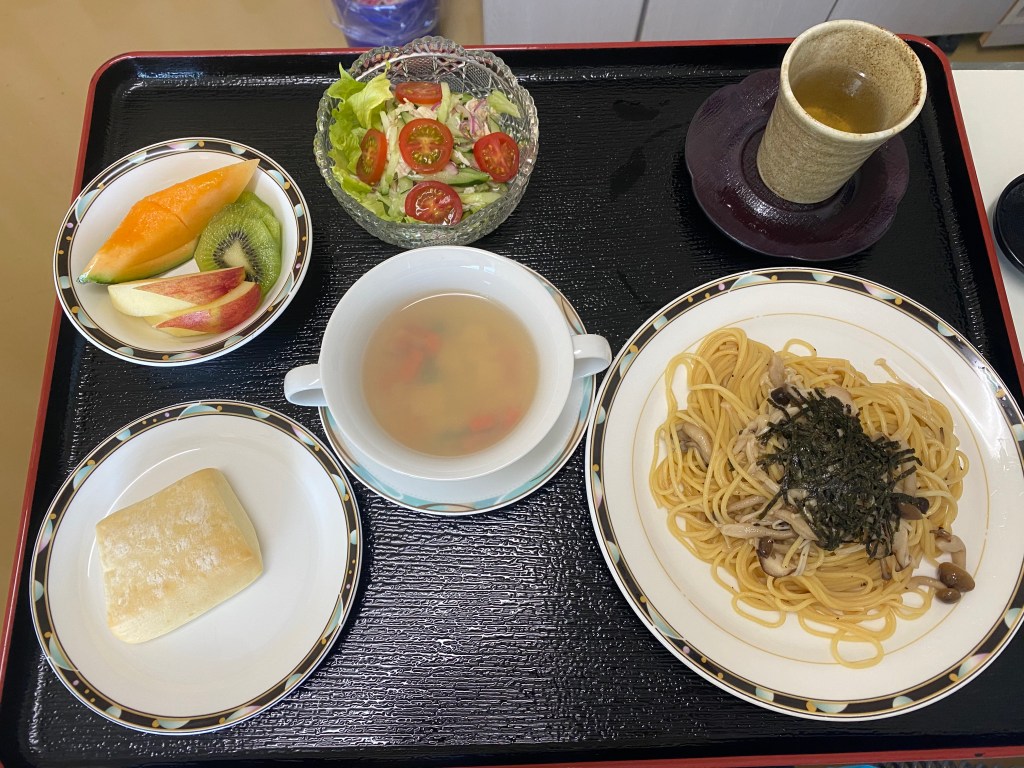
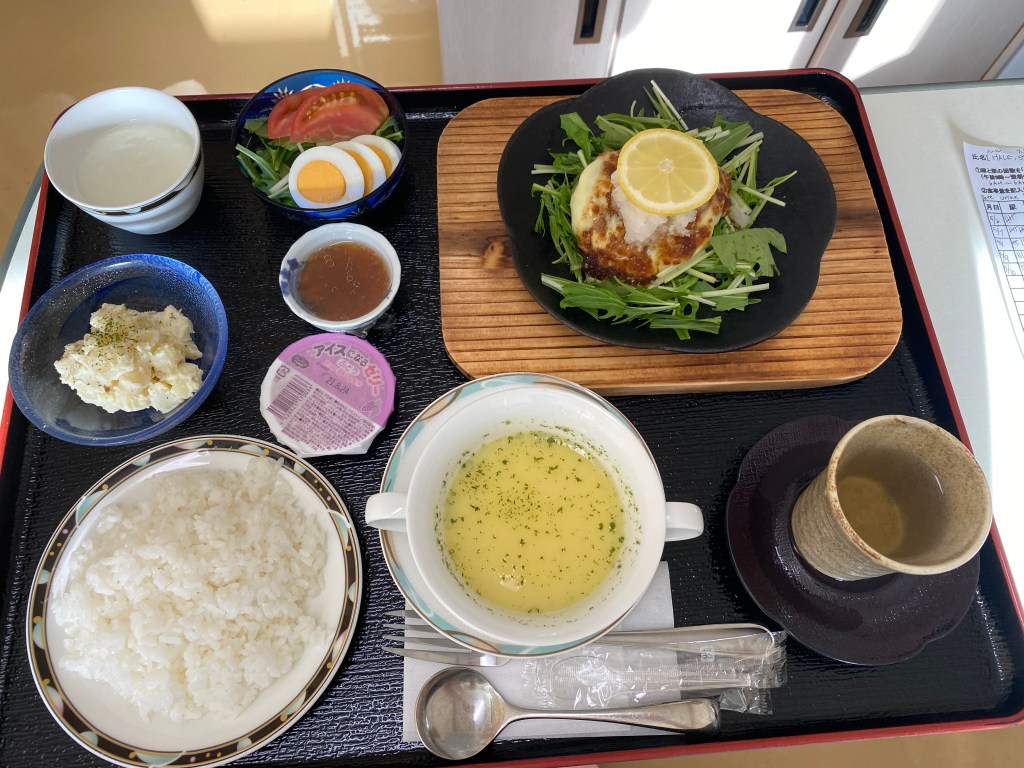
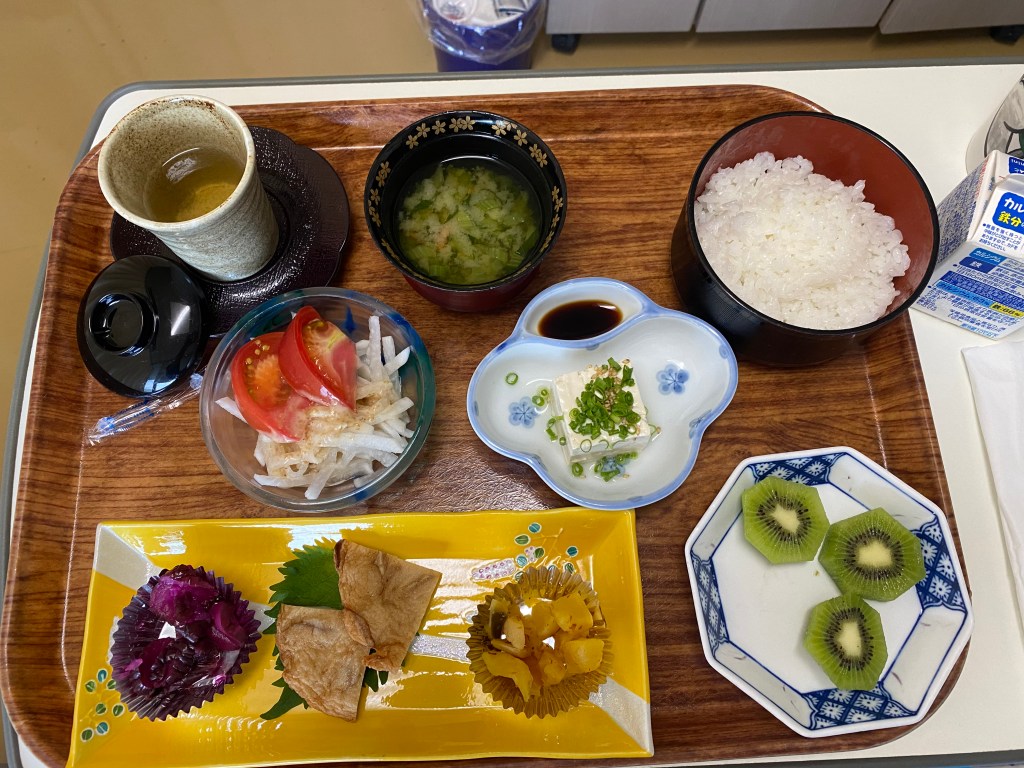
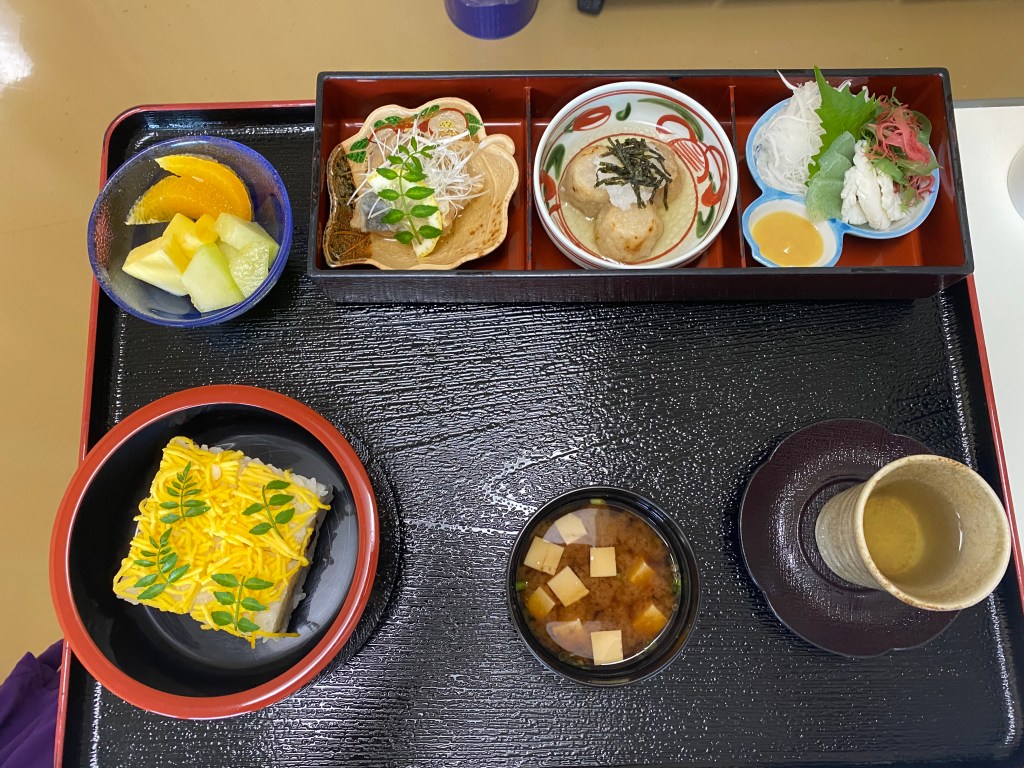
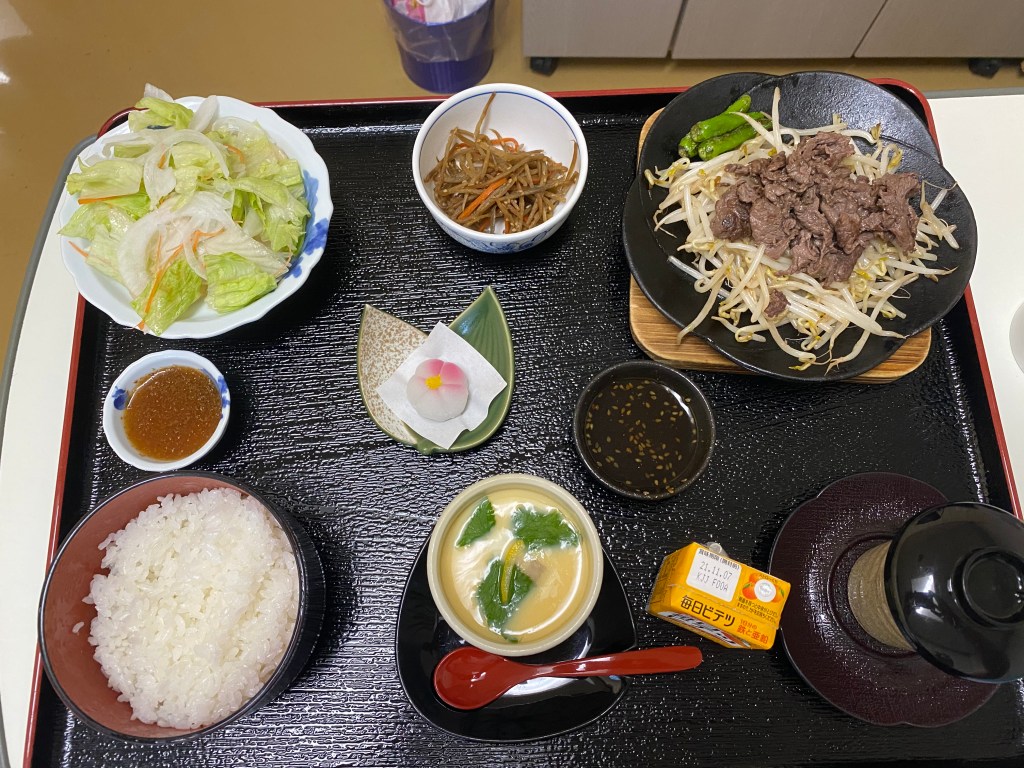
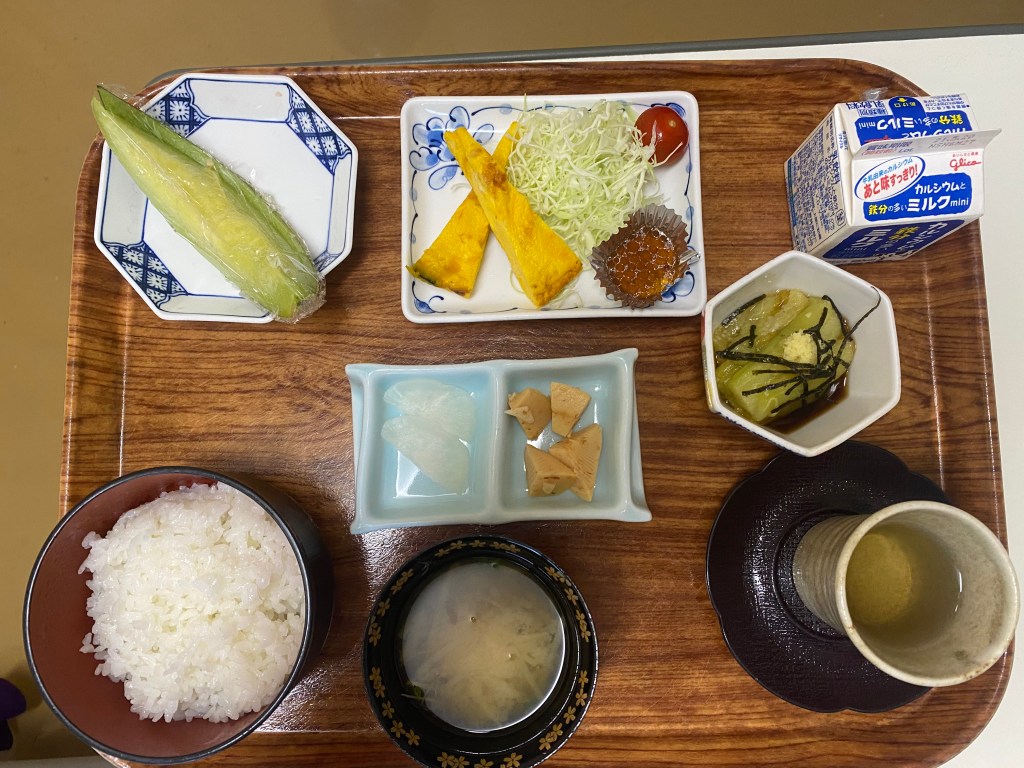
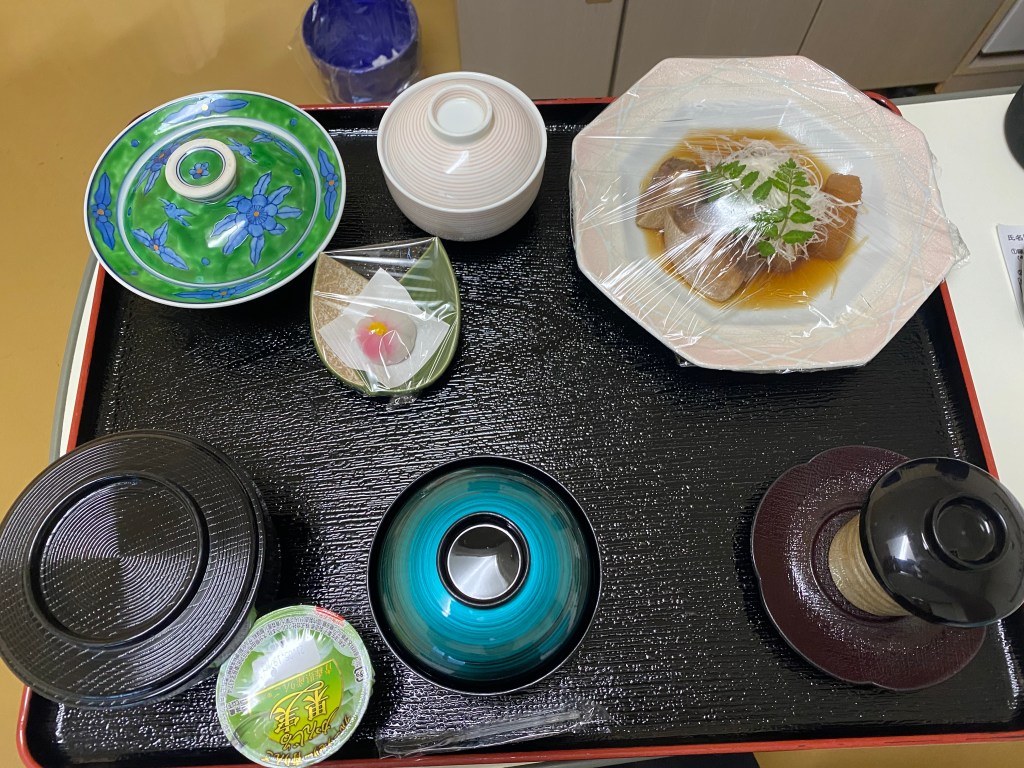
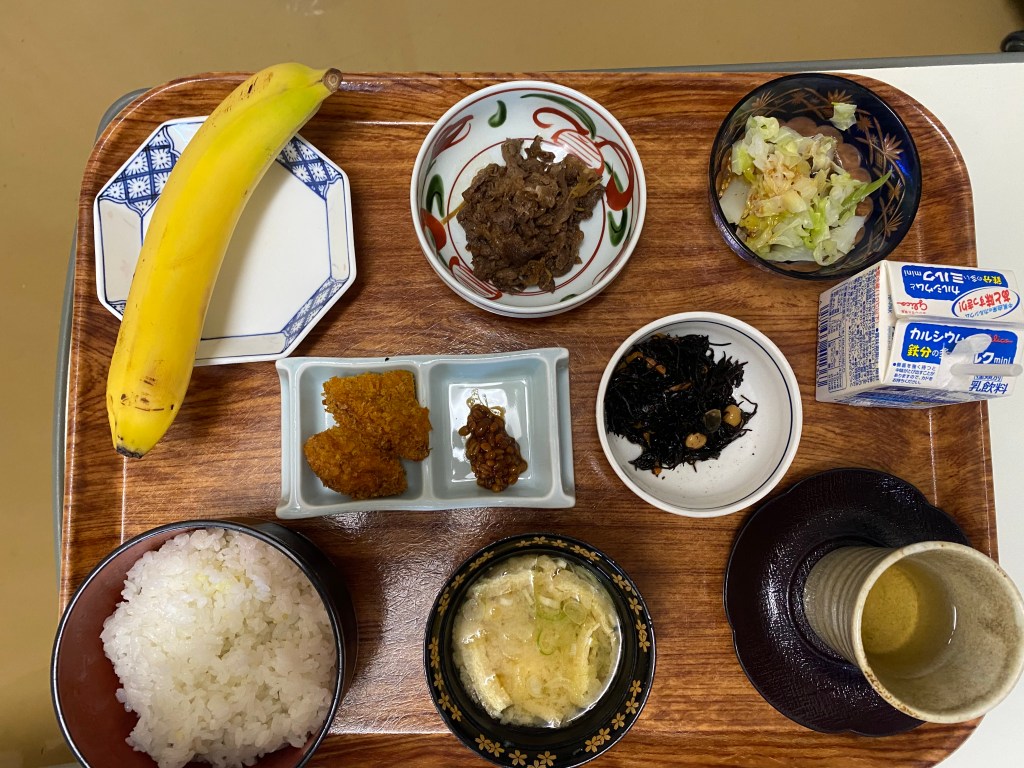
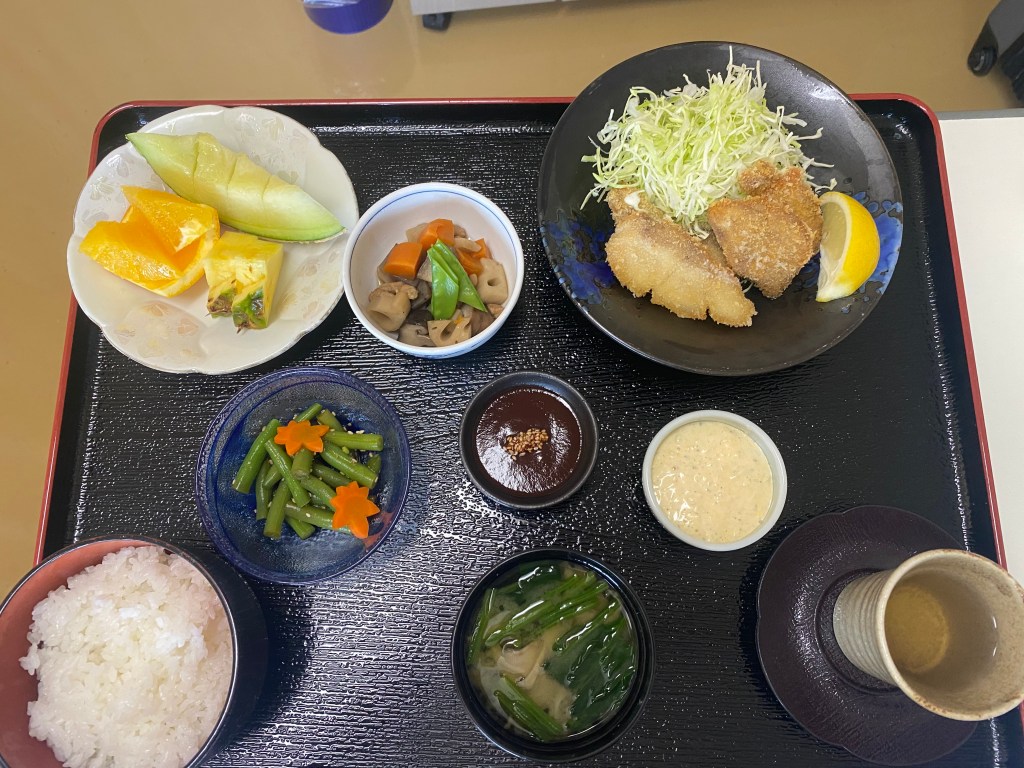
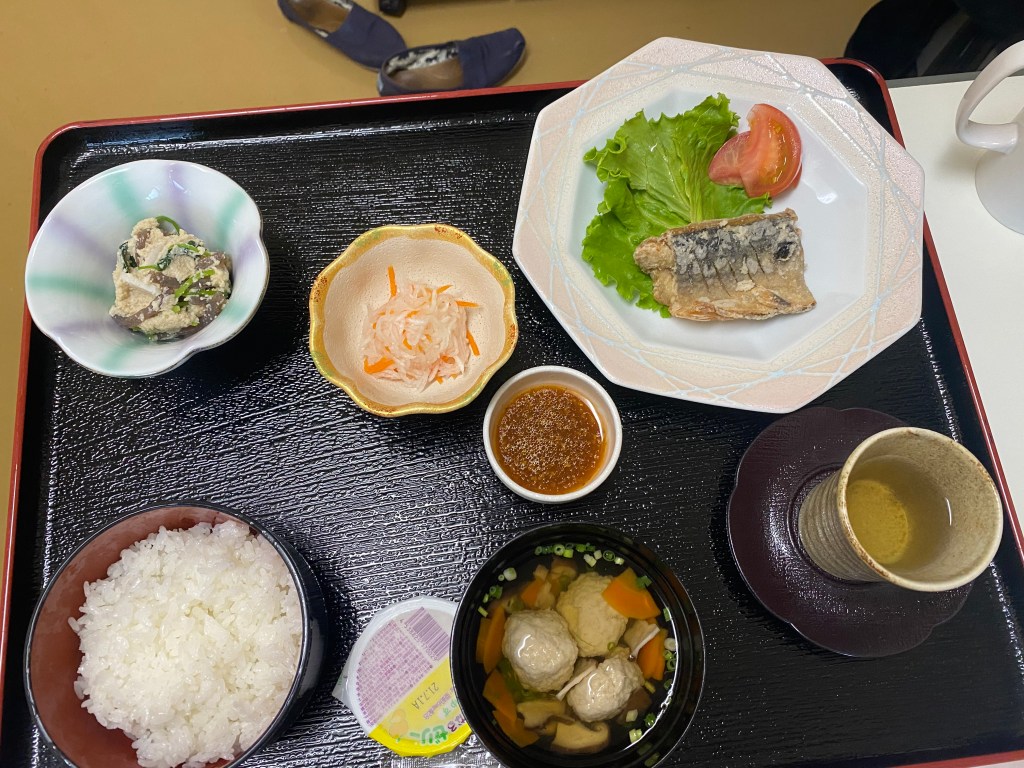
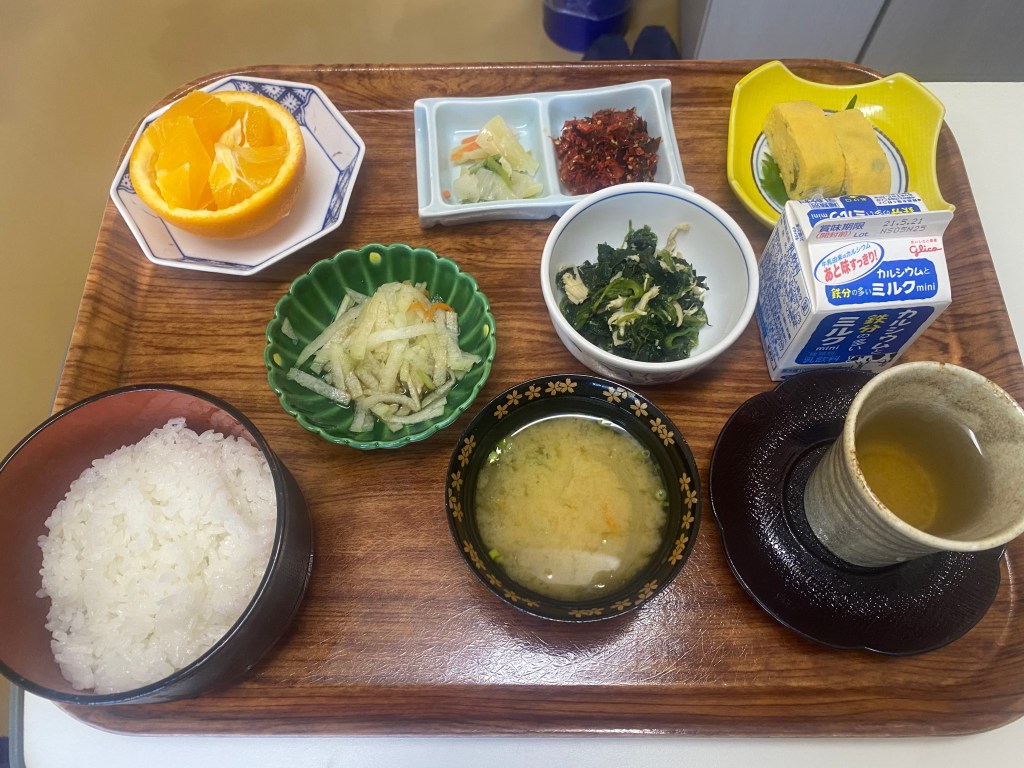
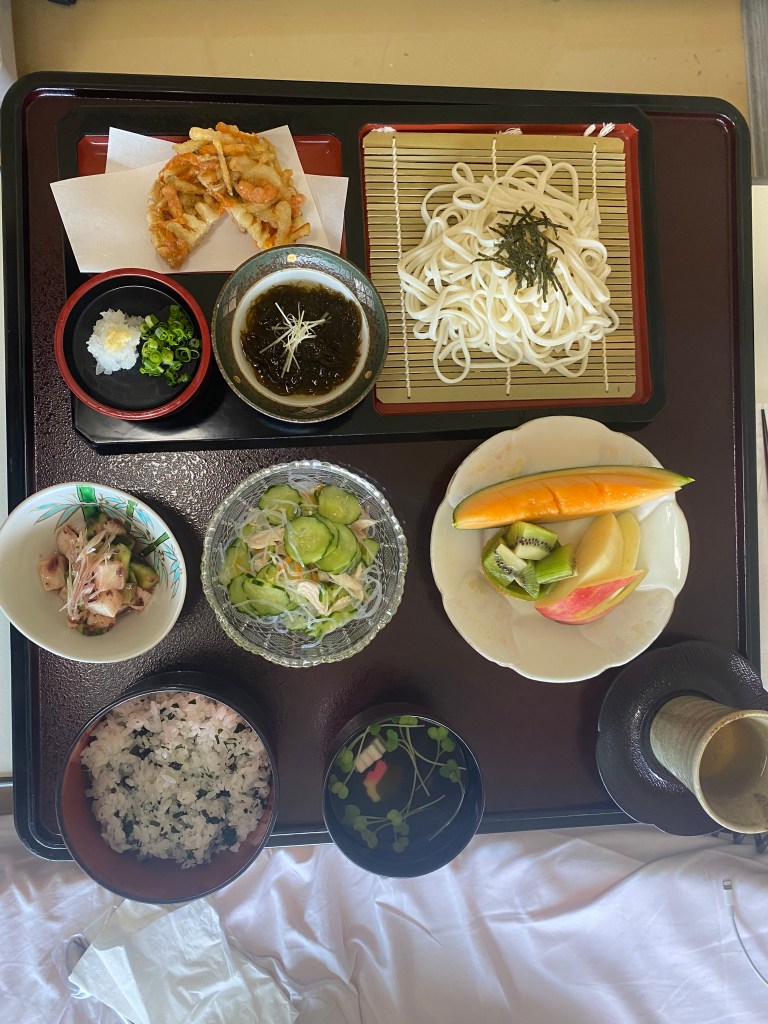
Overall, the hospital was amazing! All the staff I encountered were amazing an tried their best to communicate with me. Some knew a little English and some would just use Google Translate. I know some Japanese and I actually learned more phrases during my stay. I also used Google Translate when needed. The food was amazing! I was given the option of western style food or Japanese food. I picked Japanese food which was amazing!
Food
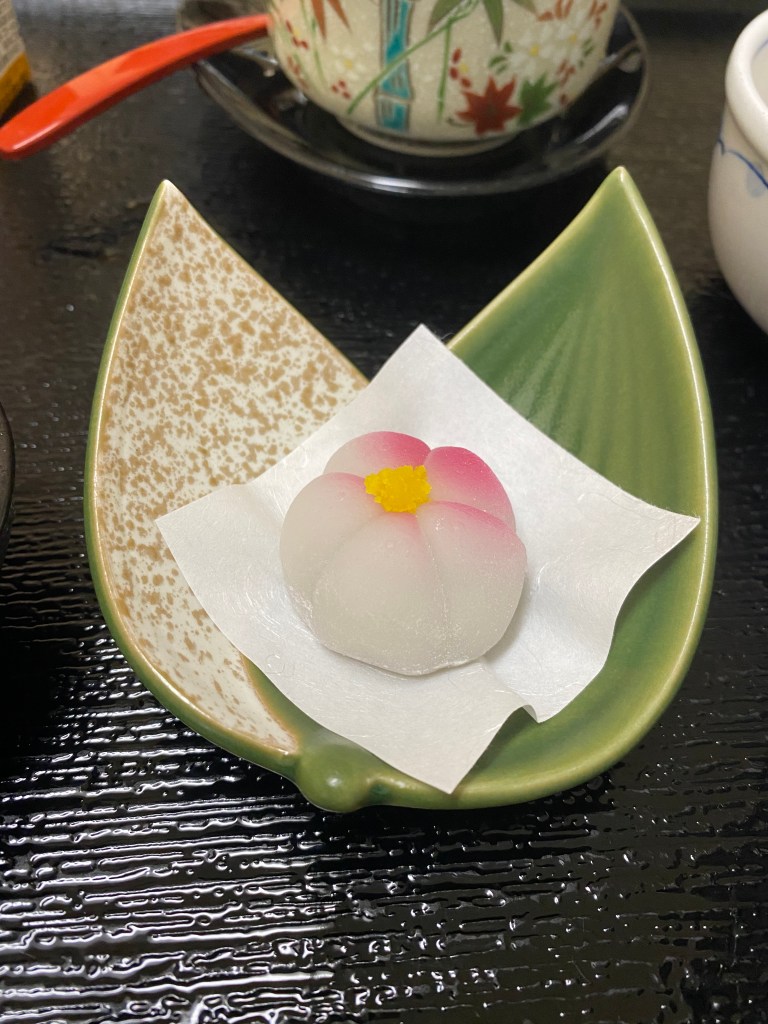
I knew after giving birth I would be given a celebratory meal. I soon realized that they serve two different kinds of meals. One meal seem to be just a standard meal for everyone on the floor and the other meal was for those who have given birth. The meals after given birth were always warm and very plentiful. I also noticed, after given birth, my meals would arrive 30 minutes before the standard meals. I enjoyed all my meals.
My Room
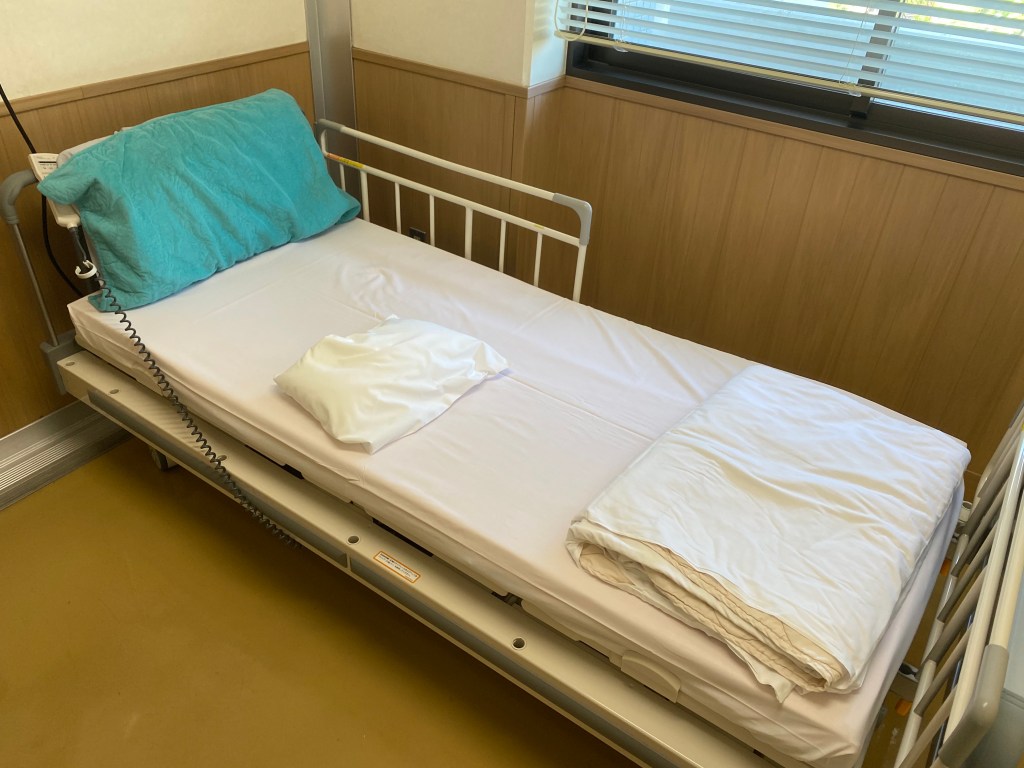
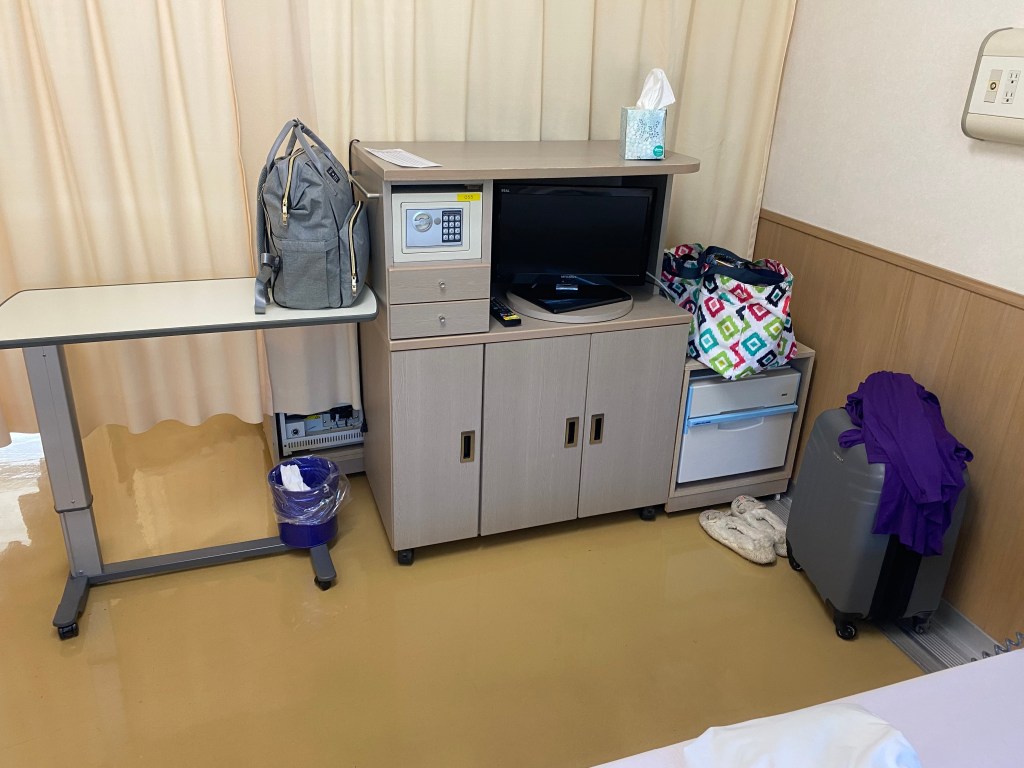
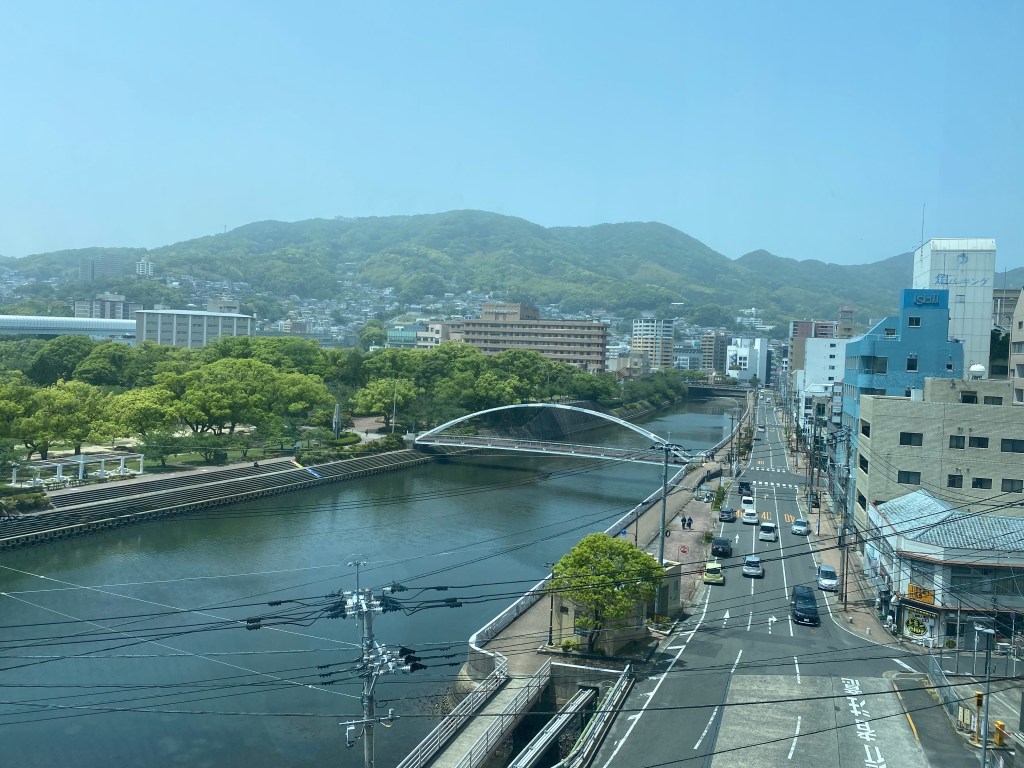
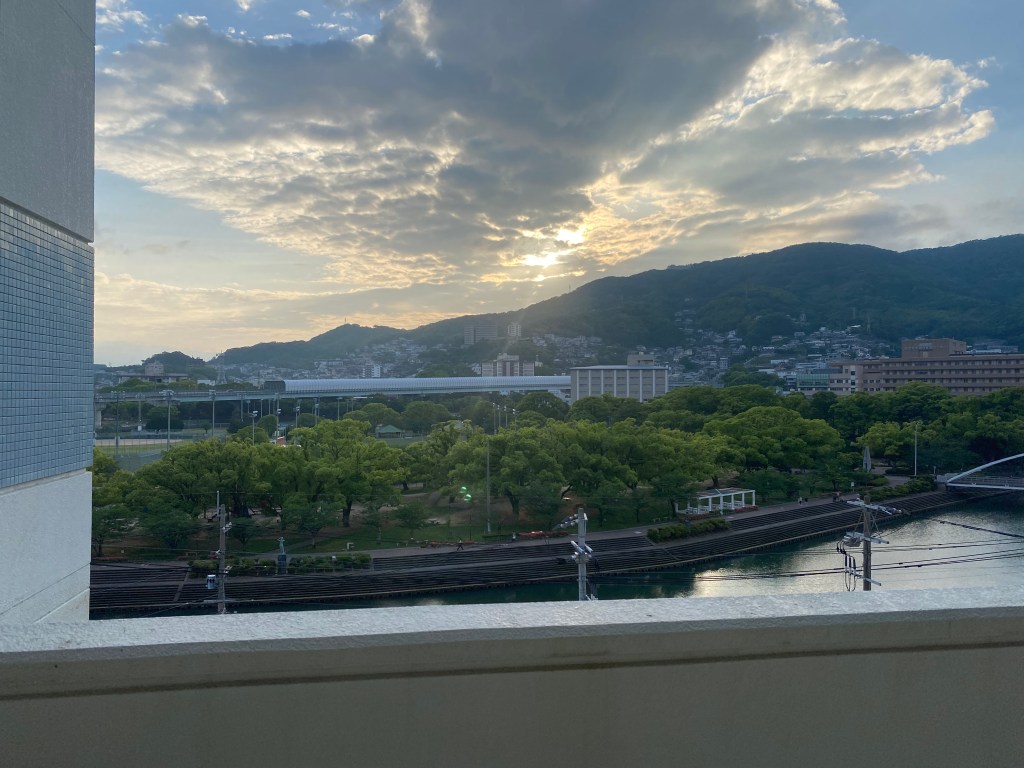
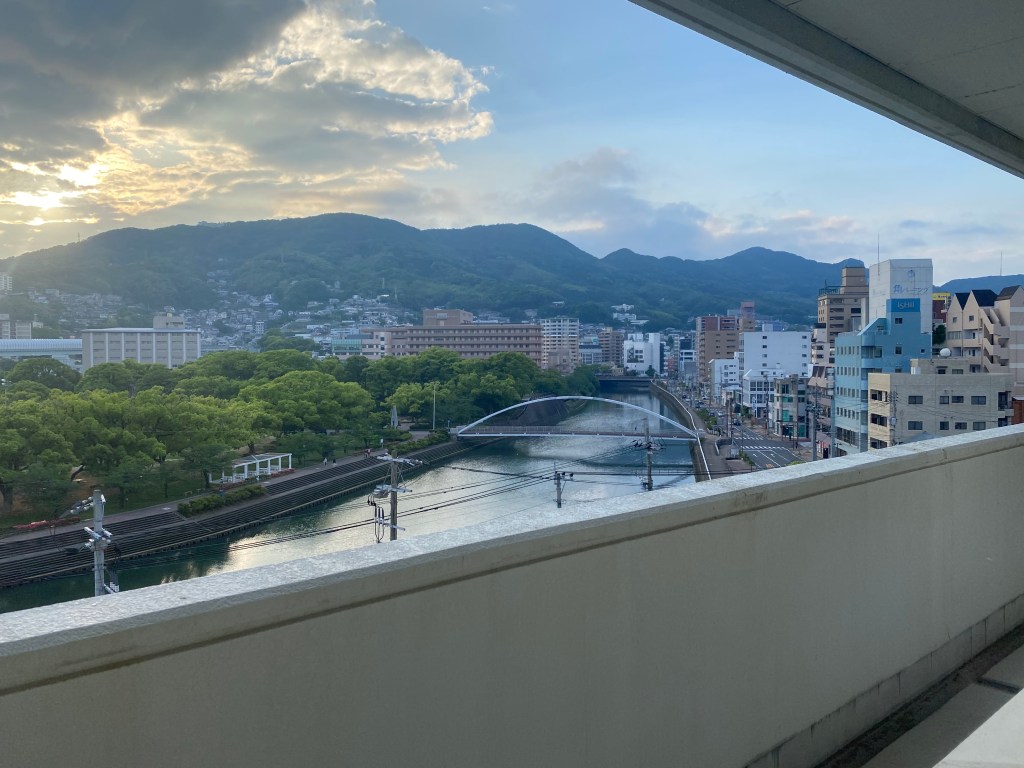
I agreed to stay in a shared room. A private room would have cost 8,000 yen ($80) a day. If it would have been for a day or two, not a problem. I spent a total of 8 days in the hospital. I was happy with my room. I shared my room with three other women who were also pregnant. You are probably thinking that is too many people and it got loud. Actually, no. We were all quiet and when watching TV you were to wear headphones. I never plugged my TV in since it would all be in Japanese. I brought my ipad and Nintendo Switch to keep me occupied. On my ipad, I downloaded some shows and movies from Netflix. I got lucky with my placement because I was placed by the window. I got a lovely view of Albuquerque Bridge and Sasebo River City Park.
NICU
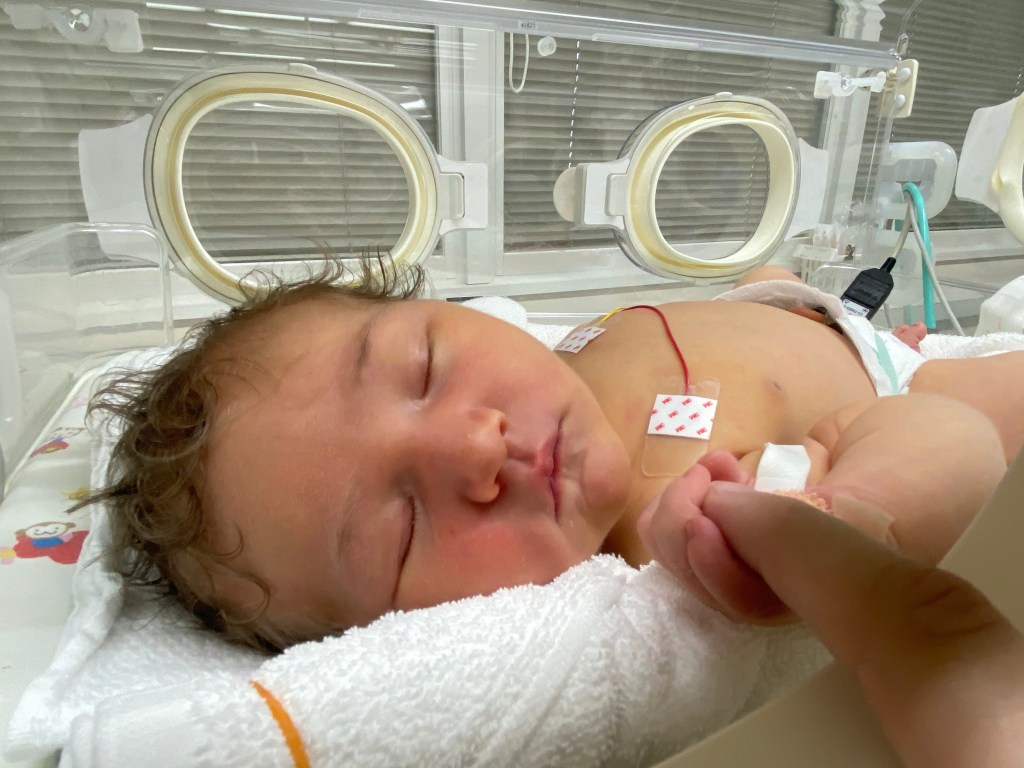
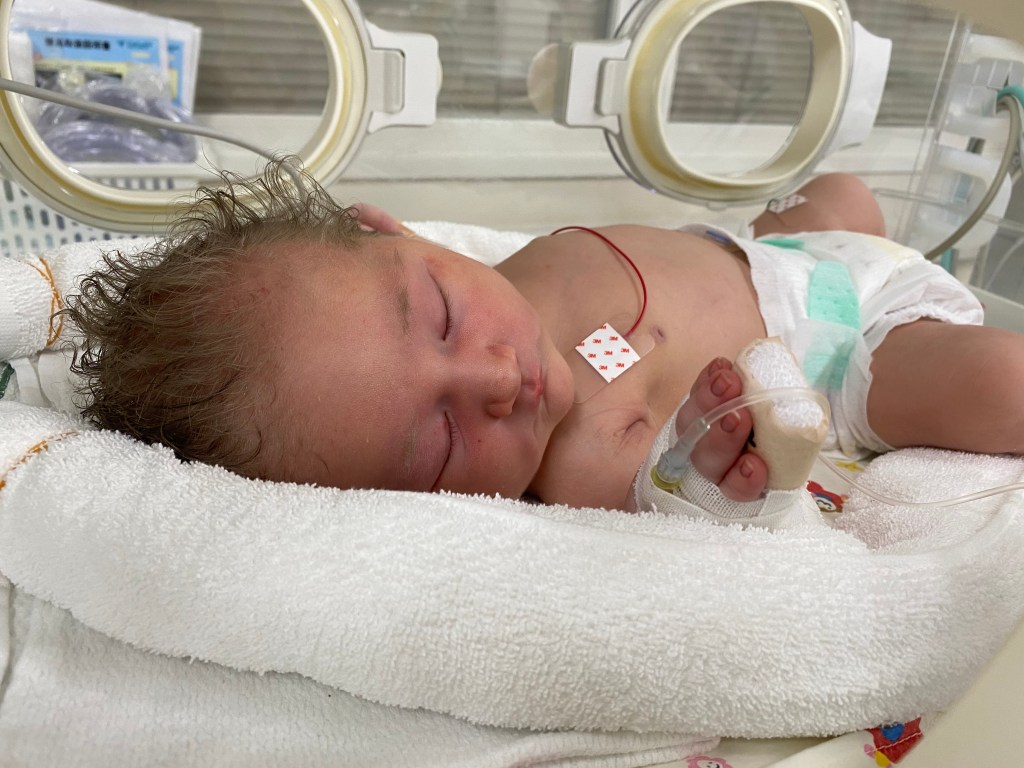
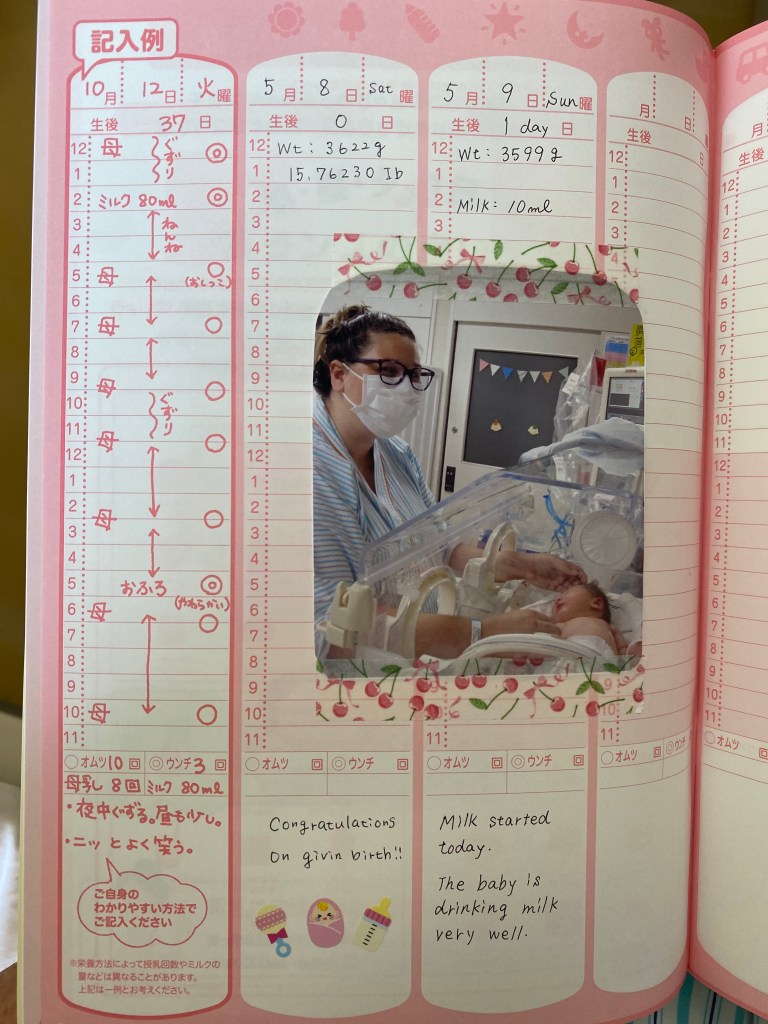
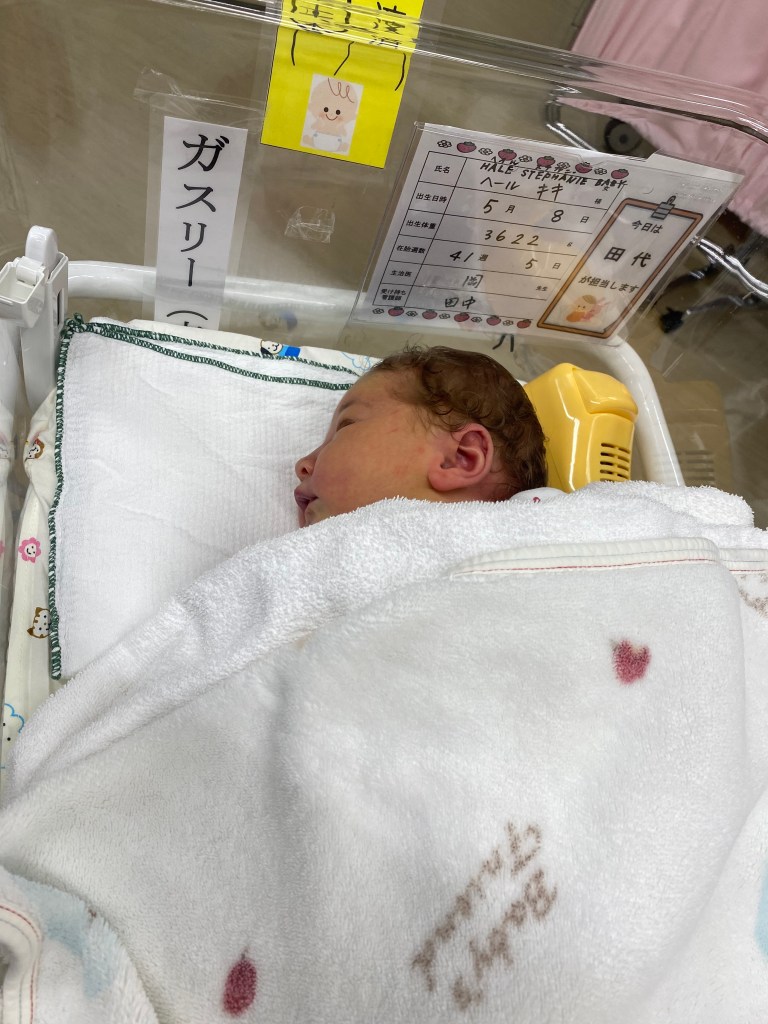
Kiki was in the NICU due to swallowing some amniotic fluid during delivery which can happen when you are induced. On Monday, May 10th I met with my translator and the Pediatrician. The Pediatrician discussed how the antibiotics were working and her infection was clearing up. They wanted to finish the round of antibiotics and how Kiki might have to stay in the NICU for a week or two. I was told how I would only be able to visit her once a day only if there were no Covid-19 cases on base. I was upset. I wanted Kiki to get better, but I also wanted her to come home. Luckily, Kiki got better and was able to come home with me on Friday, May 15th.
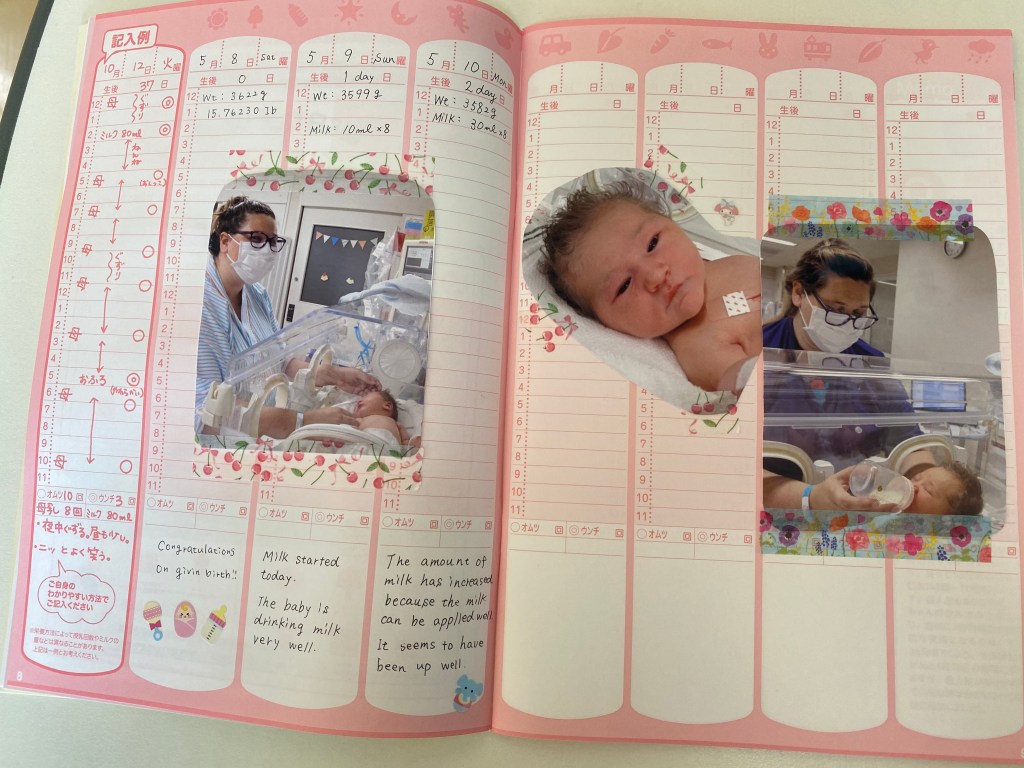
She stayed in the NICU until it was time to go home. I was able to visit her in the afternoons. The NICU would call the nurses station and a nurse would tell me to go the NICU. I would visit her three to four times. It would be to feed and change her. Being able to visit her kept me busy in the afternoons. I would go visit Kiki to fed her then go pump. I looked forward to the afternoons and evenings.
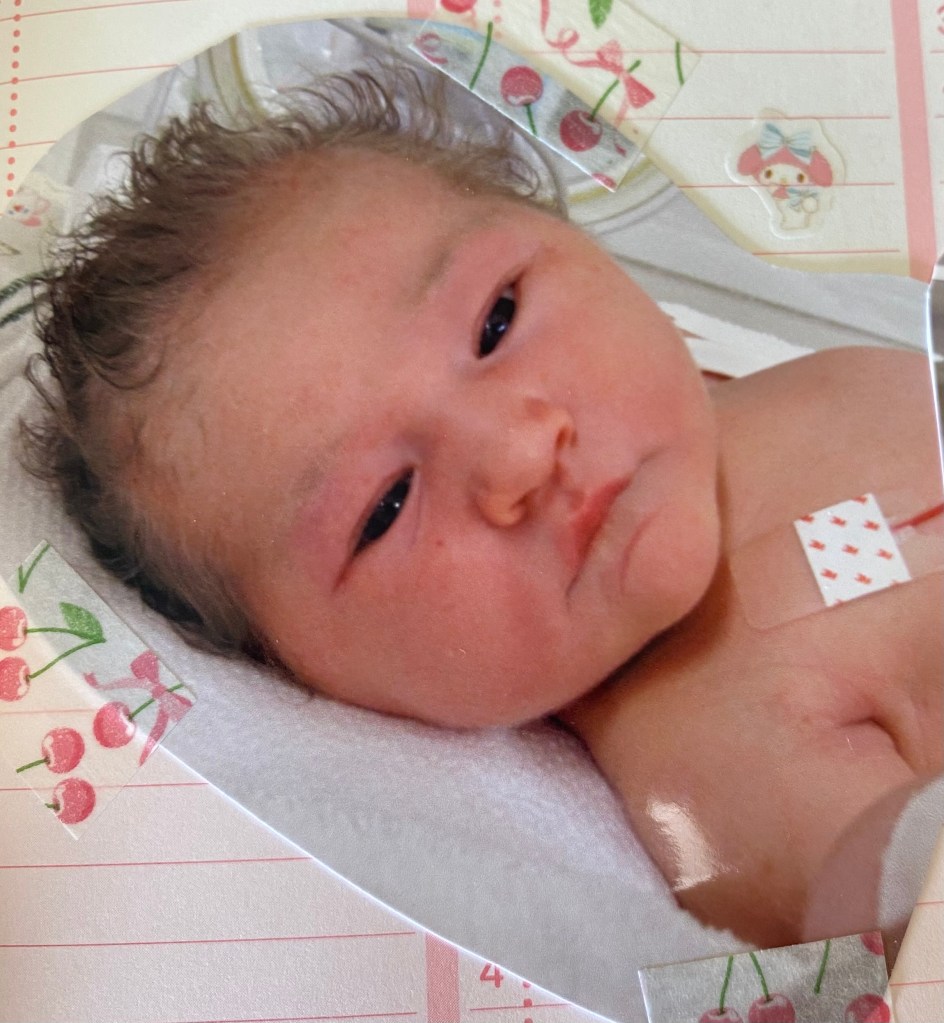
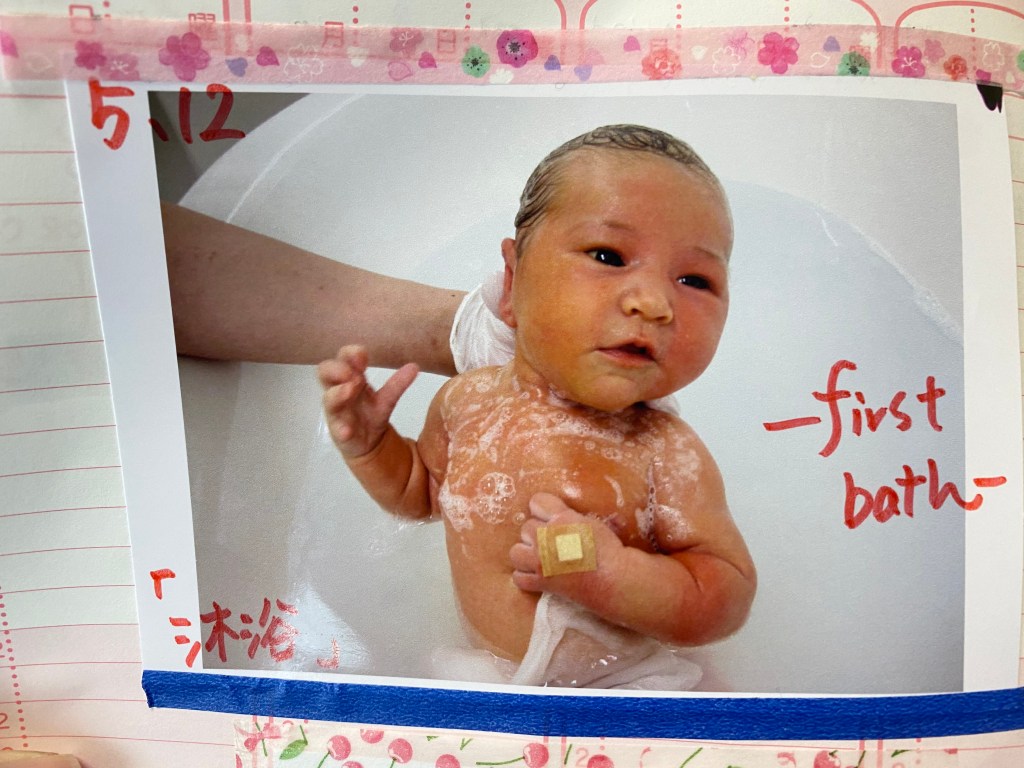
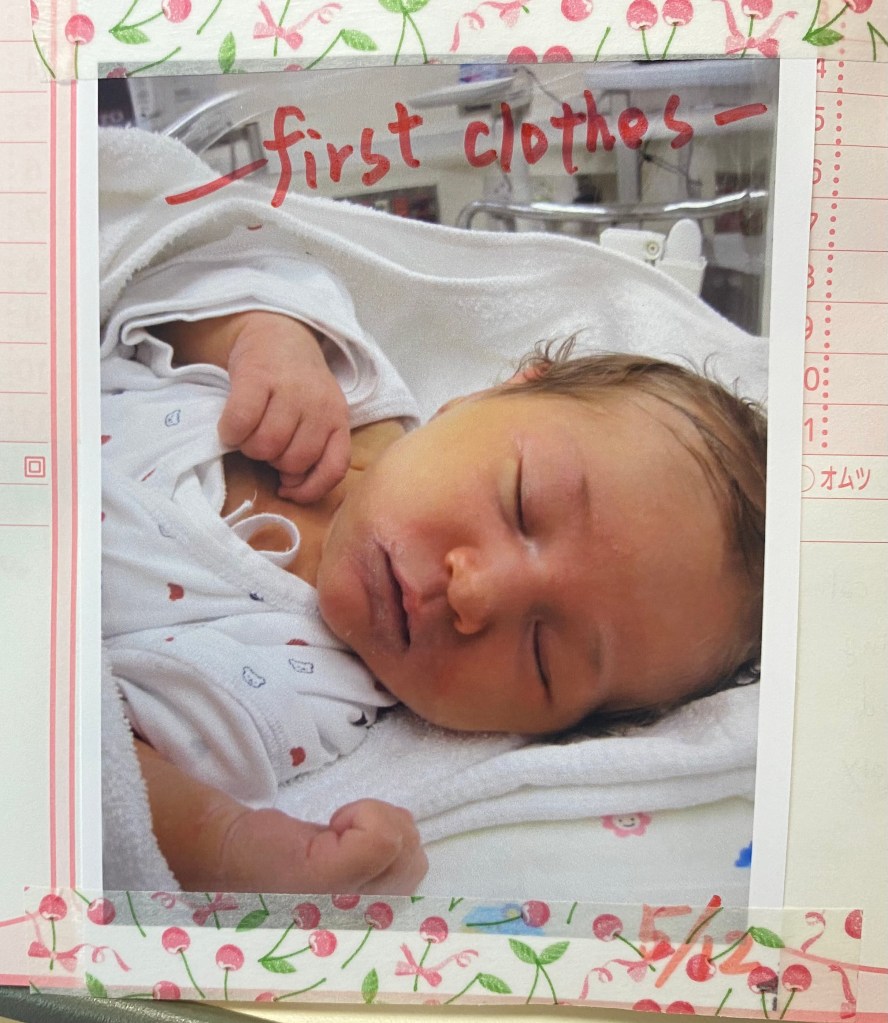
The NICU nurses were friendly and lovely. They took pictures and even filled out a baby book for Kiki during her stay.
Breastfeeding
I wanted to breastfeed Kiki. The nutritional value and the cost are the two main factors. Its amazing what a woman’s body does throughout pregnancy, but its even more outstanding when it comes to breastmilk. Breastmilk is tailored made for your child. Your body knows when your child needs extra nutrients. With Kiki being in the NICU, I wanted to make sure she got the extra protein and nutrients my breastmilk could provide.
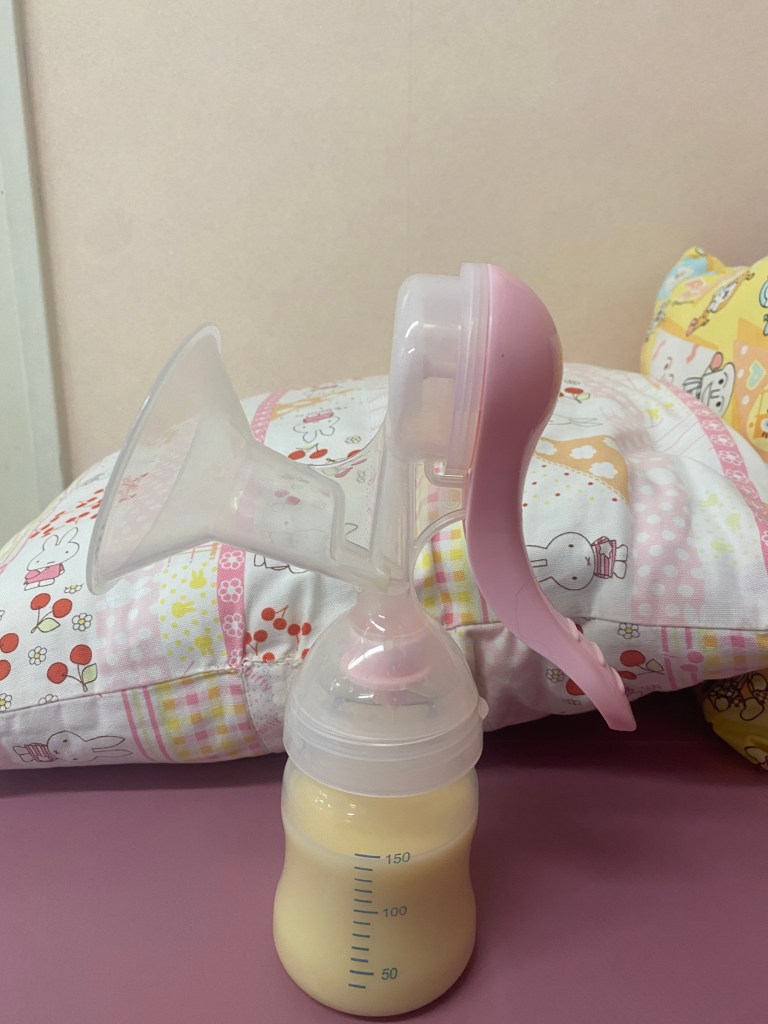
Three days after giving birth, my breast milk was starting to come in. I then worked with a nurse on extracting my breast milk. First we would stimulate the nipple for a minute then use a manual pump to finish. I would go to the breastfeeding room every three hours to manually pump. They had a refrigerator to store pumped milk. They would take my milk and give it to Kiki. How did they know it was my milk? I had to label each bottle with the date, time, and my name.
Umbilical Cord
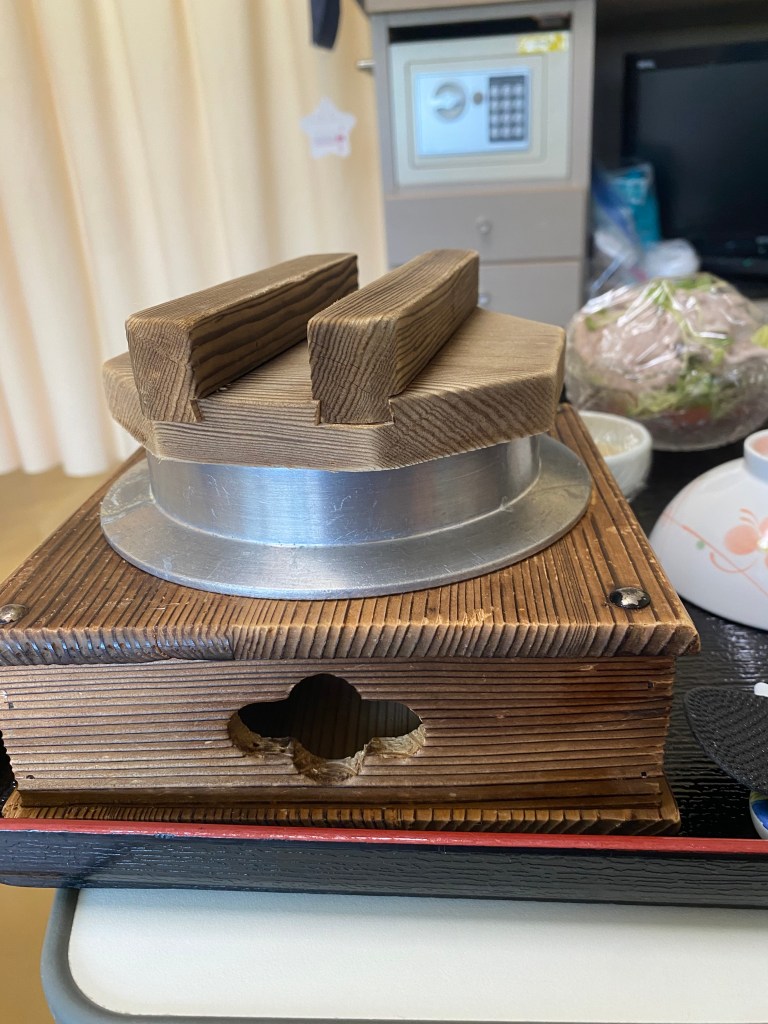
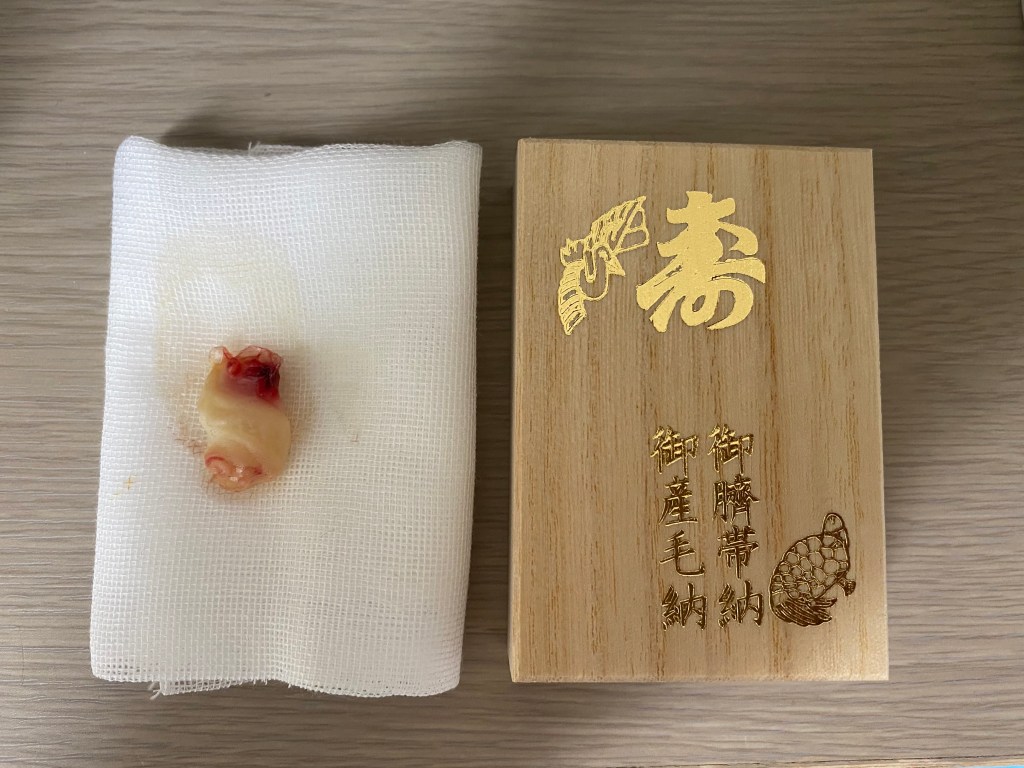
I was given a wooden box and a piece of Kiki’s umbilical cord. Once the umbilical cord dried out, I placed it in the box. In Japan, this keepsake is to represent the bond between mother and child. The mother will show the umbilical cord during birthdays and special occasions to reflect on birth.
Going Home
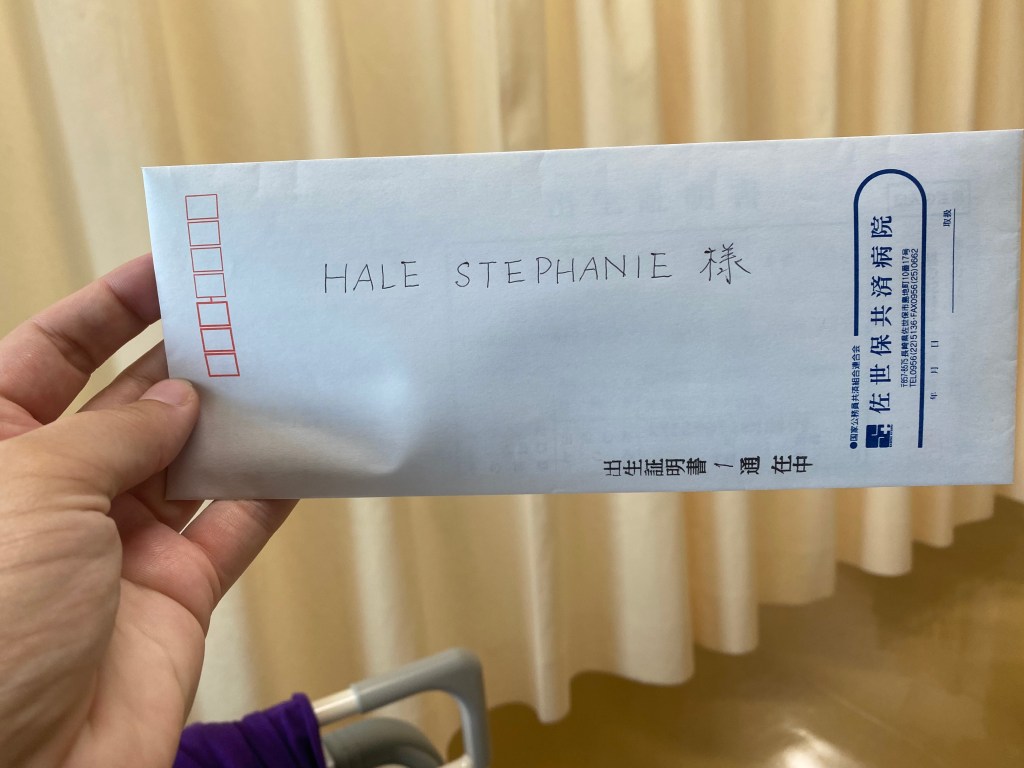
On Friday, May 15th Kiki and I got to go home. All my bags were packed and ready to go. I was given breakfast and lunch because we left at 2 p.m. Before leaving, I had to go downstairs to pay for Kiki’s proof of birth which was 3,000 yen ($30). I have to take the proof of birth to Sasebo City Hall, in order to register Kiki’s birth and get her birth certificate.
Doug picked us up at around 2 p.m. and we went home. It felt strange the first day being home. I was so use to my hospital routine. I was happy to be home.
 Hale of a Journey